Build Your Dream Website – with Website Wala



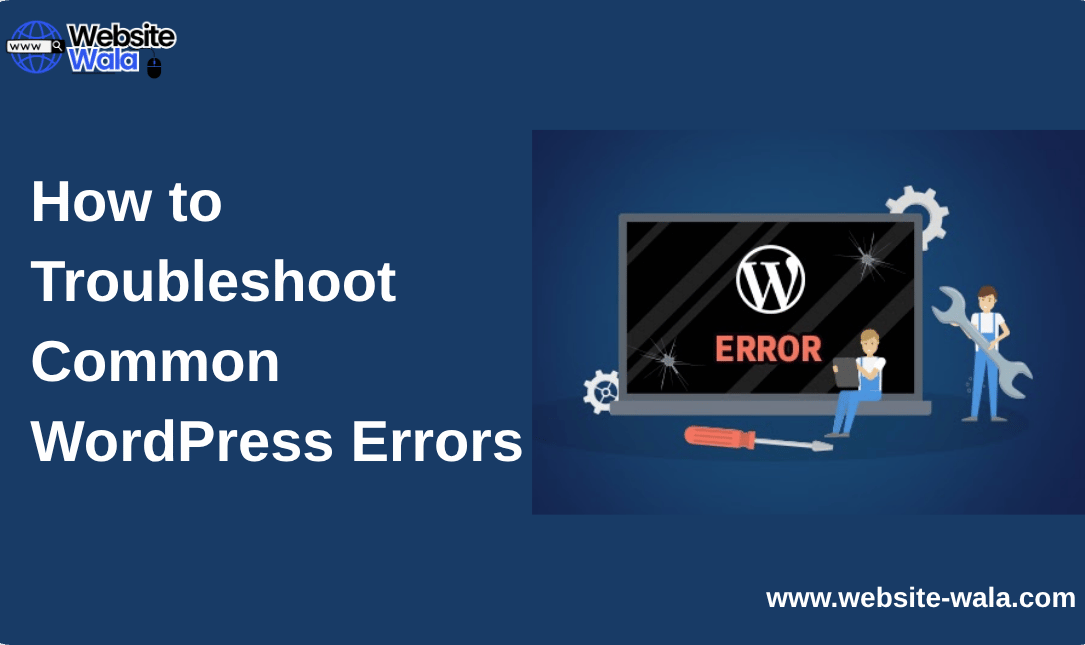
Learn How to Troubleshoot Common WordPress Errors effectively with this detailed guide covering solutions for database issues, white screens, and more.
Introduction: Understanding WordPress Errors and the Need for Troubleshooting
Running a website on WordPress offers flexibility, power, and ease of use—but it’s not immune to problems. Every website owner eventually encounters WordPress errors, ranging from plugin conflicts to the dreaded white screen of death. Knowing How to Troubleshoot Common WordPress Errors is an essential skill that ensures your site remains functional, secure, and user-friendly.
This comprehensive guide will walk you through WordPress troubleshooting techniques, solutions to common WordPress issues, and best practices for WordPress maintenance. By the end, you’ll be equipped to fix website problems quickly and confidently.
Why Learn How to Troubleshoot Common WordPress Errors
When your site goes down or starts displaying website errors, it can impact your visitors, SEO ranking, and credibility. Understanding How to Troubleshoot Common WordPress Errors helps you:
-
Save time and money on WordPress support
-
Identify recurring WordPress problems early
-
Keep your site running smoothly through proactive website maintenance
-
Avoid losing valuable traffic due to unexpected WordPress errors
Whether you’re managing a personal blog or an e-commerce platform, WordPress troubleshooting knowledge is crucial for ensuring your website stays online and performs optimally.
Step 1: Identify the Error
Before you can fix website issues, you must determine what’s wrong. WordPress often provides clues—either through error messages or abnormal behavior.
Common WordPress issues include:
-
White screen of death
-
Database connection issues
-
Plugin or theme conflicts
-
Internal server errors
-
Broken permalinks
-
Memory limit exhaustion
Each of these WordPress errors has specific causes and solutions, which we’ll explore below.
Step 2: Troubleshoot the White Screen of Death
The white screen of death is one of the most frustrating WordPress problems—your website loads as a blank white page with no error message.
How to Troubleshoot Common WordPress Errors like the White Screen of Death:
-
Disable Plugins: A faulty or incompatible plugin often triggers this issue. Access your site via FTP or cPanel, rename your
/pluginsfolder, and check if the site loads. -
Switch Themes: If the problem persists, try switching to a default theme like Twenty Twenty-Five.
-
Increase Memory Limit: Add the following line to your
wp-config.phpfile:define('WP_MEMORY_LIMIT', '256M'); -
Enable Debug Mode: Add this to your
wp-config.phpfile to reveal hidden errors:define('WP_DEBUG', true);
By systematically checking these steps, you can troubleshoot and fix website display problems efficiently.
Step 3: Resolve Database Connection Issues
Another common issue involves database connection issues, where WordPress fails to connect to its database. Your site may show a message like “Error establishing a database connection.”
How to Troubleshoot Common WordPress Errors related to Database Connections:
-
Check wp-config.php: Verify that your database name, username, password, and host are correct.
-
Repair Database: Add this line temporarily to your
wp-config.phpfile:define('WP_ALLOW_REPAIR', true);Then visit
yourdomain.com/wp-admin/maint/repair.php. -
Contact Hosting Provider: If credentials are correct, your hosting server might be down. Ask your host for WordPress support.
These steps usually resolve database connection issues quickly, restoring access to your site.
Step 4: Fix Plugin and Theme Conflicts
Many WordPress problems occur after installing or updating plugins or themes. Incompatible code can cause website errors or even crash your site.
To Troubleshoot:
-
Deactivate All Plugins: If your site loads afterward, reactivate them one by one to find the culprit.
-
Switch to Default Theme: Use a default WordPress theme to rule out theme-related issues.
-
Check for Updates: Always keep plugins and themes up to date as part of regular WordPress maintenance.
Identifying and removing conflicting extensions helps you fix website issues before they escalate.
Step 5: Resolve Internal Server Errors
The 500 internal server error is another frequent WordPress error. It can result from corrupted .htaccess files, PHP memory limits, or faulty plugins.
How to Troubleshoot Common WordPress Errors like 500 Errors:
-
Regenerate .htaccess File:
-
Rename your current
.htaccessfile to.htaccess_old. -
Go to Settings > Permalinks in your WordPress dashboard and click Save Changes to create a new one.
-
-
Increase PHP Memory Limit: Similar to earlier steps, modify the
wp-config.phpfile to allocate more memory. -
Reinstall Core Files: Download a fresh copy of WordPress and upload the
/wp-adminand/wp-includesfolders via FTP.
Following these actions usually resolves most common WordPress issues linked to server errors.
Step 6: Fix Broken Permalinks
When links return 404 errors despite existing pages, it’s a permalink issue.
How to Troubleshoot Common WordPress Errors involving Permalinks:
-
Go to Settings > Permalinks and click Save Changes without altering anything.
-
If that fails, manually replace your
.htaccessfile with the default WordPress rules.
This quick step can fix website navigation problems and restore proper link functionality.
Step 7: Enable WordPress Debugging
When standard methods fail, debugging tools can reveal hidden causes.
How to Troubleshoot Common WordPress Errors Using Debug Mode:
Add these lines to wp-config.php:
define('WP_DEBUG', true); define('WP_DEBUG_LOG', true); define('WP_DEBUG_DISPLAY', false);
This configuration stores WordPress errors in a debug.log file located in the /wp-content/ directory. Reviewing this log provides valuable insights into WordPress troubleshooting.
Step 8: Regular WordPress Maintenance and Prevention
Prevention is the best form of WordPress troubleshooting. Incorporate these practices into your website maintenance routine:
-
Back up regularly: Always keep a full backup before updates.
-
Update plugins and themes: Outdated software often leads to WordPress problems.
-
Use security plugins: Tools like Wordfence help identify vulnerabilities.
-
Optimize databases: Regular cleanup reduces database connection issues.
-
Monitor performance: Use uptime monitoring to detect website errors early.
Proactive WordPress maintenance helps minimize downtime and keeps your site secure.
Step 9: Seek Professional WordPress Support
Sometimes, WordPress solutions require expert intervention. If you’ve followed all troubleshooting steps but the issue persists, reach out to WordPress support teams or hosting providers. Professionals can quickly diagnose server-level WordPress errors or complex plugin conflicts.
Conclusion: Mastering How to Troubleshoot Common WordPress Errors
Knowing How to Troubleshoot Common WordPress Errors empowers you to manage your website confidently and minimize disruptions. From handling the white screen of death to resolving database connection issues, this guide covered the most frequent common WordPress issues and their solutions.
Remember, regular WordPress maintenance, proper backups, and staying updated with the latest WordPress solutions are the keys to preventing website errors. With patience and a systematic approach to WordPress troubleshooting, you’ll keep your site stable, secure, and running smoothly for the long term.