Build Your Dream Website – with Website Wala



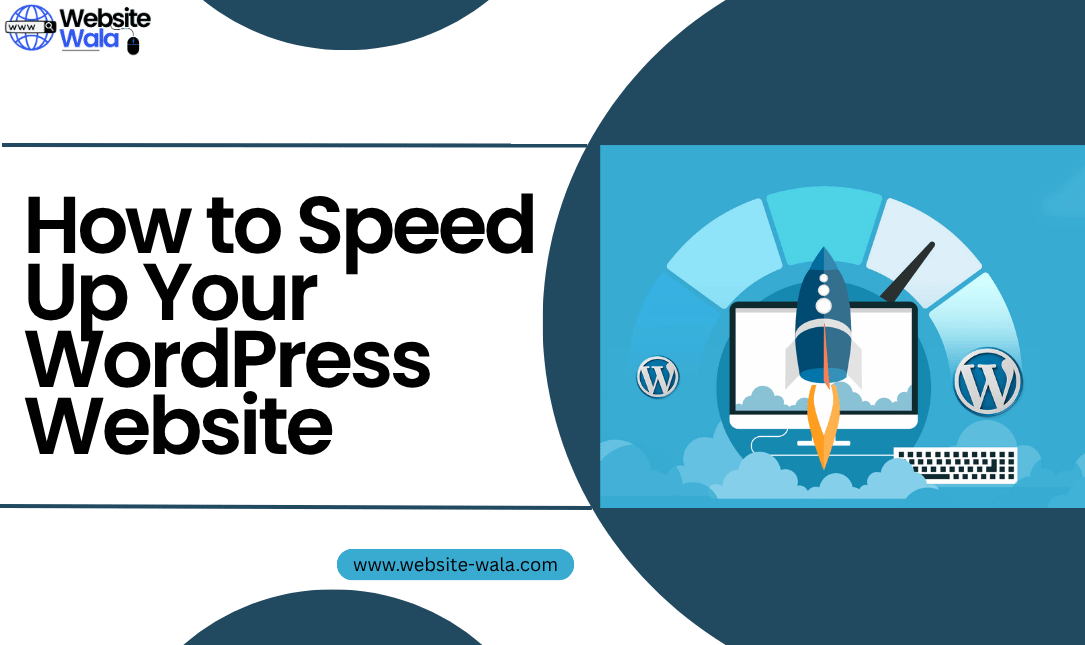
Learn How to Speed Up Your WordPress Website with proven optimization tips to improve site speed, boost performance, and enhance user experience.
Introduction: Why Website Speed Matters
If your WordPress website loads slowly, you’re not alone — and it’s costing you visitors, conversions, and rankings. Learning How to Speed Up Your WordPress Website isn’t just about making it faster; it’s about improving the overall user experience, increasing website performance, and ensuring better visibility in search results.
Google considers page speed a ranking factor, and users expect websites to load in under three seconds. A slow-loading site can result in higher bounce rates and lower engagement. In this guide, we’ll explore practical, step-by-step strategies on How to Speed Up Your WordPress Website effectively.
1. Choose a Fast and Reliable Hosting Provider
Your web host plays a crucial role in your WordPress website speed. Shared hosting may be affordable, but it often sacrifices performance. To improve site speed, consider upgrading to a managed WordPress hosting service or a VPS (Virtual Private Server).
Look for hosting providers that offer:
-
SSD (Solid-State Drives) storage
-
Built-in caching techniques
-
Optimized server environments for WordPress
-
Content Delivery Network (CDN) support
Providers like SiteGround, Kinsta, and WP Engine are known for their reliable performance and server-level website optimization.
2. Optimize Your WordPress Theme and Plugins
A lightweight theme is essential when learning How to Speed Up Your WordPress Website. Avoid themes packed with unnecessary features or heavy visual elements. Choose themes that prioritize website speed optimization, such as GeneratePress, Astra, or Neve.
Plugins can also slow down your site. To increase website performance, regularly review and remove unused plugins. Use tools like Query Monitor to identify slow-loading plugins and replace them with more efficient alternatives.
3. Use Effective Caching Techniques
One of the most effective ways to speed up loading time is by implementing proper caching techniques. Caching stores a static version of your site, reducing the need for the server to process PHP scripts or database queries repeatedly.
Recommended caching plugins include:
-
WP Rocket (premium) – All-in-one caching and website optimization tool
-
W3 Total Cache – Comprehensive caching options
-
LiteSpeed Cache – Perfect for sites on LiteSpeed servers
These tools can dramatically improve site speed by minimizing load on the server and delivering content faster to users.
4. Optimize Images for Faster Loading
Image optimization is another critical factor in How to Speed Up Your WordPress Website. Uncompressed images can drastically slow down your WordPress website speed.
Here’s how to optimize images efficiently:
-
Resize images before uploading (don’t rely solely on HTML/CSS resizing).
-
Compress images using tools like TinyPNG or plugins such as Smush or ShortPixel.
-
Use next-gen formats like WebP for smaller file sizes.
-
Lazy load images so they only load when visible on the screen.
Proper image optimization ensures your site maintains quality visuals without compromising load times.
5. Implement a Content Delivery Network (CDN)
A CDN stores copies of your website on multiple servers across the globe. When visitors access your site, the CDN delivers content from the nearest server, significantly reducing latency and speeding up loading time.
Top CDN providers for website speed optimization include:
-
Cloudflare
-
Bunny.net
-
KeyCDN
Integrating a CDN is an easy yet powerful step to increase website performance, especially for international audiences.
6. Minify and Combine CSS, JavaScript, and HTML Files
Every WordPress page load triggers multiple requests to load scripts and styles. By minifying and combining these files, you can improve site speed and speed up loading time.
Minification removes unnecessary characters (spaces, comments, line breaks) from code without affecting functionality.
You can use plugins like:
-
Autoptimize
-
Fast Velocity Minify
-
WP Rocket (includes minification and combination features)
This process streamlines your site’s code, ensuring faster rendering and better website optimization.
7. Clean Up and Optimize Your Database
Over time, your WordPress database accumulates unnecessary data such as post revisions, spam comments, and transient options. Regular database cleaning can increase website performance and reduce server load.
Plugins like WP-Optimize or Advanced Database Cleaner make this task easy. Schedule automatic cleanups to ensure your database remains lean and efficient.
8. Disable Hotlinking and Leverage Browser Caching
Hotlinking occurs when other websites use your image URLs, consuming your bandwidth. Disable hotlinking by adding specific rules to your .htaccess file.
Meanwhile, browser caching stores static resources locally on users’ browsers. This allows returning visitors to load your site faster, significantly improving user experience.
By enabling browser caching through your caching plugin or hosting provider, you reinforce the principles of website speed optimization.
9. Use Lazy Loading for Images and Videos
Lazy loading delays the loading of media files until they are actually needed (i.e., when users scroll to them). This technique greatly reduces initial page load time.
Modern WordPress versions include built-in lazy loading, but plugins like a3 Lazy Load provide more control. Applying lazy loading to both images and videos can further speed up loading time and improve site speed.
10. Keep WordPress Core, Themes, and Plugins Updated
Outdated software can not only slow down your WordPress website speed but also introduce security vulnerabilities. Updates often include performance improvements that directly affect how fast your website loads.
Make it a habit to:
-
Regularly update WordPress core files
-
Keep all plugins and themes current
-
Remove any unused themes or extensions
Staying up-to-date ensures your site benefits from the latest website optimization enhancements.
11. Monitor Performance with Speed Testing Tools
To master How to Speed Up Your WordPress Website, continuous performance monitoring is essential. Use reliable tools to track your progress and identify bottlenecks:
-
Google PageSpeed Insights – Offers detailed performance reports and suggestions
-
GTmetrix – Provides speed scores and waterfall breakdowns
-
Pingdom Tools – Useful for tracking site load times globally
Regular testing helps ensure your website speed optimization efforts deliver measurable results.
12. Reduce External HTTP Requests
Third-party scripts like ads, fonts, and analytics can affect WordPress website speed. To increase website performance, limit the use of external resources and host essential files locally when possible.
For instance, host Google Fonts or analytics scripts on your own server to reduce dependency on external networks. This small change can improve site speed and enhance reliability.
Conclusion: Take Action to Boost Your WordPress Website Speed
Now that you know How to Speed Up Your WordPress Website, it’s time to implement these strategies and enjoy the results. From caching techniques and image optimization to using a CDN and optimizing your database, every improvement contributes to faster load times and a better user experience.
A speedy site not only satisfies visitors but also boosts SEO rankings, conversions, and credibility. Start applying these website optimization techniques today to increase website performance and make your WordPress site stand out from the competition.