Build Your Dream Website – with Website Wala



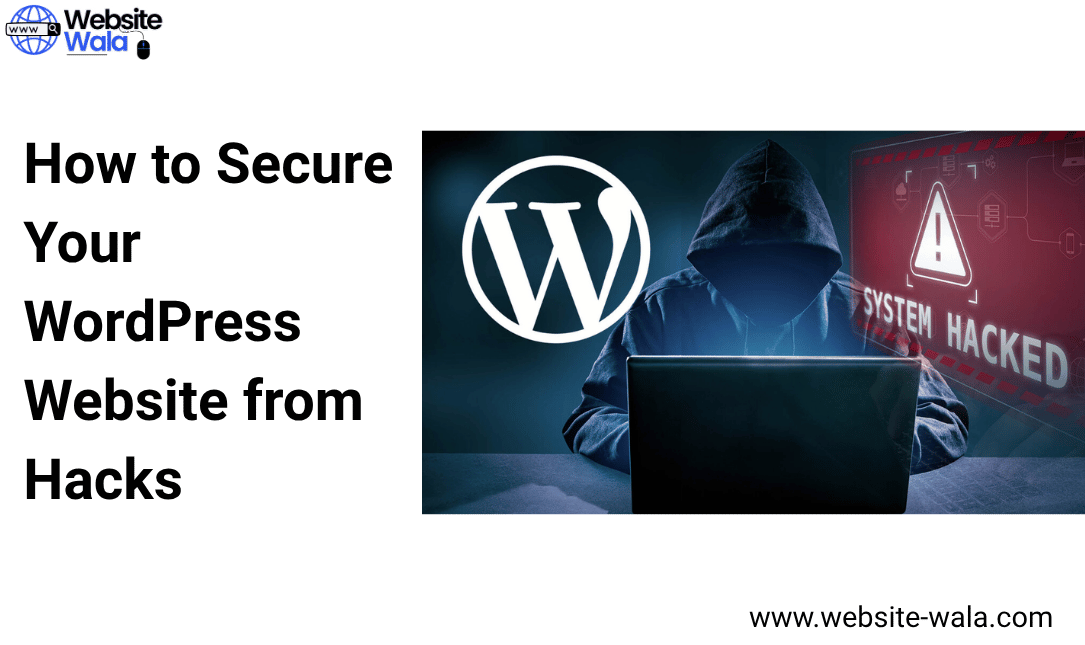
Learn How to Secure Your WordPress Website from Hacks with proven tips, plugins, and strategies to enhance your website security in 2025.
Introduction: Why You Must Secure Your WordPress Website
WordPress powers over 40% of all websites on the internet, making it one of the most popular content management systems (CMS) in the world. Unfortunately, that popularity also makes it a prime target for hackers. Knowing How to Secure Your WordPress Website from Hacks is no longer optional—it’s a necessity for every site owner. Whether you run a small blog or an eCommerce store, strengthening your WordPress security helps prevent cyber attacks, protect sensitive user data, and maintain trust with your audience.
This guide provides a detailed breakdown of the best strategies to secure your WordPress website, from login safety to plugin protection.
1. Keep WordPress Core, Themes, and Plugins Updated
One of the simplest yet most effective ways to learn How to Secure Your WordPress Website from Hacks is to regularly update your WordPress core, themes, and plugins. Hackers often exploit vulnerabilities in outdated software.
Why it matters:
-
Updates often include security patches.
-
Outdated plugins are a leading cause of WordPress security breaches.
Action Steps:
-
Enable automatic updates for minor releases.
-
Regularly audit your plugins and delete those that are inactive or no longer supported.
-
Update themes only from trusted developers.
By maintaining updated components, you drastically reduce the risk of website security threats.
2. Use Strong and Secure Login Credentials
Weak passwords are one of the easiest ways for hackers to infiltrate your site. A critical step in learning How to Secure Your WordPress Website from Hacks is using secure login credentials.
Tips for strong credentials:
-
Use a combination of uppercase, lowercase, numbers, and symbols.
-
Avoid common passwords like “admin123” or “password.”
-
Change your passwords every 3–6 months.
-
Use a password manager to store complex passwords securely.
Additionally, rename the default “admin” username to make brute-force attacks less effective.
3. Enable Two-Factor Authentication (2FA)
Two-Factor Authentication adds an extra layer of website safety by requiring users to verify their identity beyond just a password. This simple step can prevent hacks even if a hacker manages to steal your credentials.
Recommended plugins for 2FA:
-
Google Authenticator
-
Wordfence Security
-
iThemes Security
By incorporating 2FA, you’re making your WordPress security strategy much stronger.
4. Install Reliable WordPress Security Plugins
Using security plugins is a smart and efficient way to secure your WordPress website. These plugins monitor suspicious activity, block malicious IPs, and protect your database.
Top WordPress security plugins include:
-
Wordfence: Offers firewall protection and malware scanning.
-
Sucuri Security: Provides website monitoring, malware removal, and performance optimization.
-
iThemes Security: Strengthens user authentication and prevents brute-force attacks.
Each of these tools can help you protect your WordPress website without requiring technical expertise.
5. Use a Secure Hosting Provider
Your hosting environment plays a major role in How to Secure Your WordPress Website from Hacks. A reputable web host offers server-level security, daily backups, and DDoS protection.
Choose a host that provides:
-
Free SSL certificates.
-
Regular malware scans.
-
Firewall protection.
-
Automated backups.
Managed WordPress hosting services like Kinsta, SiteGround, and WP Engine are built with website security as a priority.
6. Secure Your Website with SSL (HTTPS)
An SSL certificate encrypts data transmitted between your server and visitors, preventing sensitive information from being intercepted. Not only does it enhance website safety, but it also boosts SEO rankings.
To install SSL:
-
Obtain a free SSL from Let’s Encrypt.
-
Update your WordPress settings and .htaccess file to enforce HTTPS.
SSL is a fundamental component of How to Secure Your WordPress Website from Hacks and should be implemented immediately if not already in place.
7. Limit Login Attempts and Block Suspicious IPs
Hackers often use brute-force attacks to guess your username and password repeatedly. By limiting login attempts, you can prevent hacks before they succeed.
How to implement:
-
Use plugins like Limit Login Attempts Reloaded.
-
Temporarily block IP addresses after failed login attempts.
-
Monitor your login logs for unusual patterns.
This step is crucial for maintaining website safety and minimizing unauthorized access.
8. Perform Regular Backups
Backups are your safety net in case your website gets compromised. A good backup strategy is essential in How to Secure Your WordPress Website from Hacks and recover quickly if something goes wrong.
Best practices for backups:
-
Automate daily or weekly backups.
-
Store copies offsite using cloud storage like Google Drive or Dropbox.
-
Test backups periodically to ensure they restore correctly.
Backup plugins such as UpdraftPlus or BlogVault make this process simple and reliable.
9. Change Default WordPress Database Prefix
By default, WordPress assigns the prefix “wp_” to all database tables. Hackers target this prefix when attempting SQL injection attacks.
To strengthen your WordPress security:
-
Change your database prefix during installation (e.g.,
wpsecure_). -
Use a plugin like WP-DBManager to update it safely if your site is already live.
This small step adds another layer of defense to protect your WordPress website.
10. Disable File Editing in the Dashboard
WordPress allows administrators to edit theme and plugin files directly from the dashboard. While convenient, this feature poses a risk if a hacker gains access.
To disable file editing:
-
Add the following line to your
wp-config.phpfile:define('DISALLOW_FILE_EDIT', true);
This prevents malicious code from being injected into your files, helping you secure your WordPress website more effectively.
11. Monitor Website Activity and Logs
Constant monitoring helps detect suspicious actions before they cause harm. Regularly checking user activity logs ensures no unauthorized changes are made.
Use plugins like:
-
WP Activity Log – for detailed activity tracking.
-
Sucuri Audit Logs – for real-time threat alerts.
Keeping an eye on logs is an essential step in How to Secure Your WordPress Website from Hacks because it allows you to respond to threats immediately.
12. Educate Your Team on Website Security
Even the best security plugins can’t protect against human error. If multiple users manage your site, educate them on website safety best practices, such as:
-
Recognizing phishing attempts.
-
Avoiding public Wi-Fi for admin access.
-
Regularly updating passwords.
A well-informed team is your first line of defense to prevent cyber attacks.
Conclusion: Take Action to Secure Your WordPress Website Today
Understanding How to Secure Your WordPress Website from Hacks is the first step toward long-term online success. Implementing these proactive measures—regular updates, strong passwords, reliable security plugins, and regular backups—will dramatically reduce your risk of getting hacked.
Your WordPress security is not a one-time task; it’s an ongoing commitment to website safety and digital trust. By staying vigilant, you can protect your WordPress website, prevent hacks, and ensure a smooth, secure experience for every visitor.