Build Your Dream Website – with Website Wala



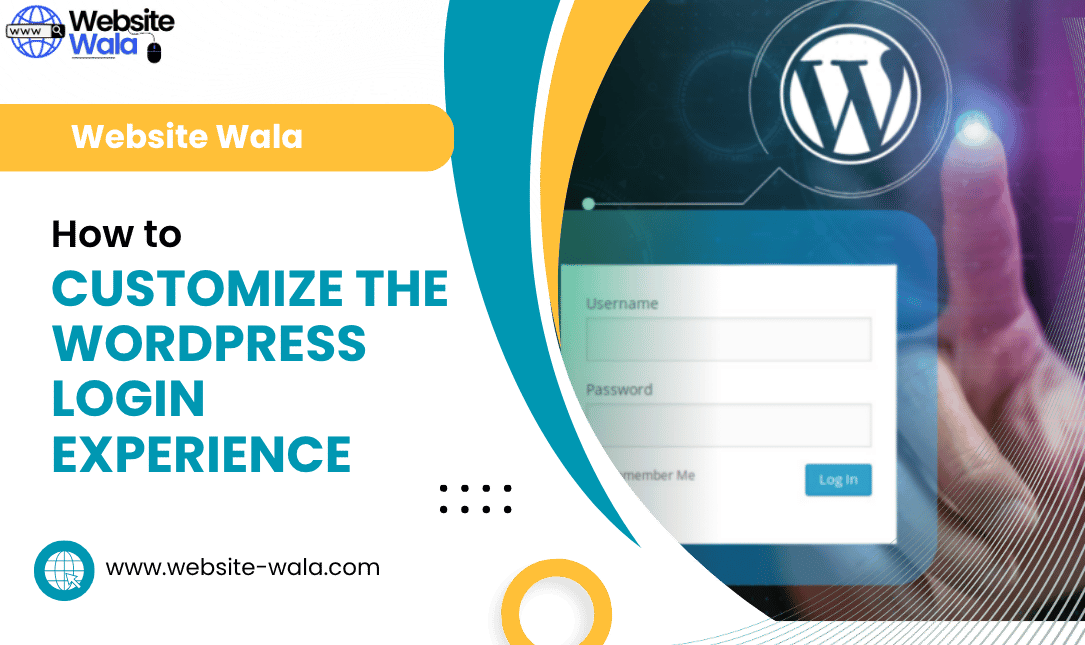
Learn How to Customize the WordPress Login Experience to enhance branding, improve user experience, and create a professional website login page design.
How to Customize the WordPress Login Experience: A Complete Guide
When visitors or clients access your WordPress website, the login page is often the first interaction they have with your brand. Unfortunately, the default WordPress login screen looks the same for every site. If you want to build credibility and reflect your brand’s identity, understanding How to Customize the WordPress Login Experience is essential. This guide will show you how to create a unique, professional, and fully branded WordPress login page that aligns perfectly with your website’s design and user experience.
Why Customize the WordPress Login Page?
Before diving into How to Customize the WordPress Login Experience, it’s important to understand why it matters. The login page is more than just a gateway—it’s part of your website’s identity. Through WordPress login customization, you can:
-
Strengthen your website branding: Replace the default WordPress logo with your own to create a consistent brand presence.
-
Enhance user experience: Make it easier and more enjoyable for users, clients, or team members to log in.
-
Improve security: Add custom login URLs or reCAPTCHA to prevent unauthorized access.
-
Show professionalism: A personalized login page communicates that your brand pays attention to every detail.
Step 1: Install a Plugin for WordPress Login Customization
The easiest and most popular method for WordPress login page customization is by using a plugin. While manual coding gives you more control, plugins are beginner-friendly and efficient.
Recommended Plugins for Login Page Personalization
-
Custom Login Page Customizer by Colorlib:
This plugin allows live previews while you modify your WordPress login design. You can add logos, change colors, and adjust the background easily. -
LoginPress:
A powerful tool for WordPress login customization with pre-built templates, Google reCAPTCHA, and social login options. -
Theme My Login:
Ideal if you want your login, registration, and password reset pages to look like part of your theme—perfect for consistent website branding.
Each of these plugins provides an intuitive way to experiment with user interface customization without touching a single line of code.
Step 2: Add Your Branding Elements
Branding plays a crucial role in creating a cohesive visual experience. When learning How to Customize the WordPress Login Experience, start by replacing the default WordPress logo with your company logo.
Key Branding Elements to Customize
-
Logo: Use a transparent PNG of your brand’s logo to replace the WordPress logo at the top of the WordPress login screen.
-
Background Image or Color: Choose a background that matches your website’s theme for seamless website branding.
-
Fonts and Colors: Align these elements with your main website for consistent WordPress website customization.
These steps not only make your login page visually appealing but also elevate the overall user experience.
Step 3: Customize Login Form Layout and Design
Once you’ve added branding, focus on improving the WordPress login design. Small design tweaks can drastically improve usability and aesthetics.
Design Tips for Login Page Personalization
-
Form Alignment: Center the login form for a balanced look.
-
Input Field Styling: Use rounded edges and subtle shadows for a modern touch.
-
Button Design: Customize the login button color to match your brand palette.
-
Error Message Styling: Change error message text colors to fit your theme for a polished appearance.
By applying these WordPress tips and tricks, you can make your login page personalization not only functional but also visually engaging.
Step 4: Personalize Login Messages and Links
A big part of How to Customize the WordPress Login Experience involves making the page feel personal and welcoming. Changing text elements adds warmth and relevance.
Examples of Personalization
-
Welcome Text: Replace “Welcome to WordPress” with a friendly, brand-specific greeting.
-
Custom URLs: Redirect users to a custom “Forgot Password” or “Support” page that aligns with your website login flow.
-
Footer Links: Add copyright notices, privacy policy, or help center links.
This level of login page personalization ensures that users feel connected to your brand from the moment they log in.
Step 5: Enhance Security Features
Security should always go hand in hand with WordPress login customization. When customizing the login experience, consider implementing measures that protect your site without disrupting usability.
Security Enhancements to Consider
-
Custom Login URL: Change the default
/wp-login.phpto a unique URL to deter bots. -
reCAPTCHA: Protect against spam and brute force attacks.
-
Limit Login Attempts: Prevent repeated failed logins.
-
Two-Factor Authentication (2FA): Add an extra layer of protection for administrators and users.
These techniques not only enhance user experience but also secure your WordPress login page customization.
Step 6: Add Redirects for Better User Experience
After logging in or out, users should be redirected to a relevant page. Proper redirects are part of How to Customize the WordPress Login Experience effectively.
Examples:
-
Redirect subscribers to a custom dashboard or welcome page.
-
Send administrators directly to the WordPress dashboard.
-
Guide customers to a “My Account” page on an e-commerce site.
By fine-tuning redirects, you create a smoother user interface customization and reinforce your website branding at every step.
Step 7: Advanced Customization with Custom CSS or Code
For developers or advanced users, manual coding offers even more flexibility in WordPress login page customization.
Example Code Snippet:
You can add this to your functions.php file:
function custom_login_logo() { echo '<style type="text/css"> h1 a { background-image: url(' . get_stylesheet_directory_uri() . '/images/your-logo.png) !important; } </style>'; } add_action('login_head', 'custom_login_logo');
This snippet replaces the default logo with your custom one. Combine it with additional CSS for color, font, and layout adjustments to achieve a completely unique WordPress login design.
Step 8: Test the Login Page Across Devices
Testing is often overlooked but is crucial when mastering How to Customize the WordPress Login Experience. Make sure your new login page looks and functions perfectly on desktops, tablets, and mobile devices.
Testing Checklist:
-
Does the logo display correctly?
-
Are the fields and buttons easily clickable on mobile?
-
Do colors and fonts remain consistent?
-
Are all custom redirects working properly?
A well-tested page provides a flawless user experience for all visitors.
Step 9: Maintain and Update Regularly
Finally, always revisit your WordPress login customization after theme updates or plugin changes. Consistent maintenance ensures compatibility and preserves your website branding over time.
Conclusion: Elevate Your Brand with a Custom Login Experience
Knowing How to Customize the WordPress Login Experience is a valuable skill for any site owner. A thoughtfully designed login page goes beyond aesthetics—it strengthens brand identity, improves usability, and enhances professionalism. Whether you use plugins or custom code, effective WordPress login page customization transforms a basic login screen into a branded digital gateway that reflects your site’s values.
By combining WordPress tips and tricks, strong branding, and seamless user interface customization, you can make every login interaction memorable and consistent with your brand. Start today, and turn your WordPress login screen into a powerful extension of your WordPress website customization strategy.