Build Your Dream Website – with Website Wala



Explore The Evolution of Web Design: From Static to Dynamic—how technology, UX, and responsive design have transformed the digital landscape.
The Evolution of Web Design: From Static to Dynamic
In today’s fast-paced digital era, The Evolution of Web Design: From Static to Dynamic reflects one of the most remarkable transformations in technology and communication. From the simple, text-heavy pages of the early internet to the highly interactive, user-centered platforms we experience today, the journey of web design evolution showcases how design, functionality, and user engagement have adapted to changing technologies and audience expectations.
The Early Days: The Age of Static Websites
When the internet first emerged in the 1990s, static websites dominated the web. These pages were built using basic HTML and offered little interactivity. Early web developers focused primarily on text formatting, hyperlinks, and minimal graphic design. The goal was simple: to present information in a readable format.
However, static websites had significant limitations. They couldn’t adapt to different devices, update automatically, or offer interactive elements. Each change required manual coding—an approach that restricted scalability and creativity. Despite their simplicity, these websites laid the foundation for The Evolution of Web Design: From Static to Dynamic, as they introduced the world to the concept of digital presence.
The Rise of Dynamic Websites
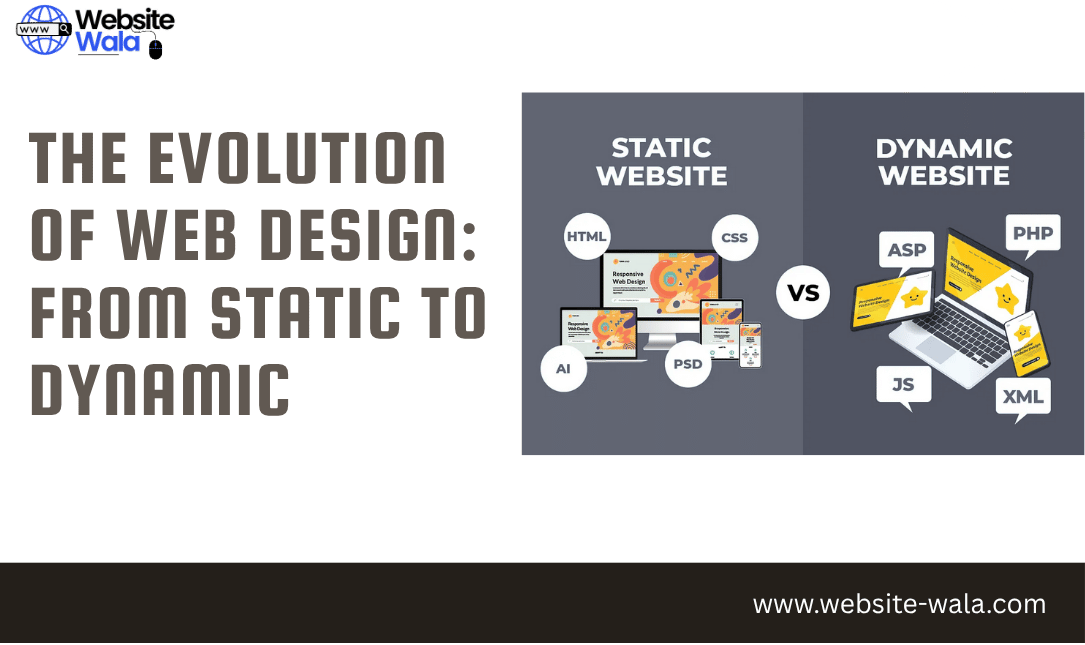
By the early 2000s, technological advancements in web development and server-side scripting languages like PHP, ASP, and JavaScript transformed how websites operated. Dynamic websites became the new standard, allowing content to be generated in real-time based on user input or database queries.
This shift marked a turning point in The Evolution of Web Design: From Static to Dynamic. Websites could now display personalized content, enable e-commerce transactions, and provide interactive user experiences. Dynamic websites made it possible to create blogs, social networks, and online stores—paving the way for the next generation of web innovation.
The Role of Technology in Web Design Evolution
The technology impact on web design has been nothing short of revolutionary. As the internet matured, developers gained access to advanced tools and frameworks such as CSS, JavaScript libraries, and later, responsive design frameworks like Bootstrap.
These technologies allowed designers to move beyond rigid layouts and embrace flexible, visually engaging interfaces. Graphic design began to play a central role in shaping the aesthetics of websites, blending creativity with functionality. This phase of The Evolution of Web Design: From Static to Dynamic demonstrated how design and development could collaborate to enhance both form and usability.
The Emergence of Responsive and Mobile-Friendly Design
With the rise of smartphones and tablets, responsive web design became essential. No longer could websites cater exclusively to desktop users; adaptability was key. This innovation represented a critical stage in The Evolution of Web Design: From Static to Dynamic, ensuring that websites adjusted seamlessly to different screen sizes and resolutions.
Mobile optimization became a priority, as search engines like Google began favoring mobile-friendly sites in their SEO rankings. Developers and designers focused on creating flexible grids, scalable images, and media queries that ensured a smooth experience across all devices. The result was a web ecosystem that prioritized accessibility and user convenience.
Enhancing User Experience and User Interface Design
In the modern web, user experience (UX) and user interface (UI) design have become the cornerstones of success. Websites are no longer just digital brochures—they’re immersive, interactive environments designed to engage visitors.
This evolution in UX and UI underscores The Evolution of Web Design: From Static to Dynamic as a user-focused revolution. Designers now emphasize usability testing, intuitive navigation, and emotional engagement. From micro-animations to adaptive layouts, every element contributes to a seamless and memorable experience.
Interactive Websites: Bridging Design and Functionality
One of the defining traits of modern dynamic websites is interactivity. Features like chatbots, real-time notifications, video backgrounds, and motion graphics have made interactive websites a standard expectation.
This trend further illustrates how The Evolution of Web Design: From Static to Dynamic has merged creativity and functionality. Interactivity not only enhances engagement but also supports digital marketing strategies by encouraging longer site visits and improved conversions. Businesses now rely on web interactivity to communicate brand personality and create stronger connections with audiences.
The Influence of SEO and Digital Marketing
No discussion on The Evolution of Web Design: From Static to Dynamic would be complete without addressing SEO and digital marketing. As websites evolved, so did search engine algorithms. Content-rich, responsive, and fast-loading websites began outperforming static ones in rankings.
Modern web development integrates SEO best practices from the ground up—optimized meta tags, semantic HTML, mobile responsiveness, and structured data all play a role. At the same time, digital marketing strategies leverage web design to attract and retain visitors. The synergy between SEO, web design, and marketing has become essential for online visibility and success.
Latest Web Design Trends: The Modern Digital Experience
As we continue exploring The Evolution of Web Design: From Static to Dynamic, it’s clear that modern design trends focus heavily on personalization and performance. Some of the latest web design trends include:
-
Minimalist layouts emphasizing simplicity and readability.
-
Dark mode options for improved visual comfort.
-
Micro-interactions that provide subtle feedback and engagement.
-
AI-driven personalization, where websites adapt to user behavior.
-
3D graphics and animation powered by advanced JavaScript frameworks.
These innovations not only reflect aesthetic preferences but also the continuous technology impact on web design, driving the industry toward smarter, faster, and more user-centric experiences.
The Future of Web Design
Looking ahead, the future of web design promises even greater integration between technology and creativity. Artificial intelligence, voice user interfaces, augmented reality, and virtual reality are set to redefine digital experiences.
In the next phase of The Evolution of Web Design: From Static to Dynamic, we’ll see websites that anticipate user needs, deliver real-time personalization, and integrate seamlessly with other smart technologies. Web designers will continue focusing on accessibility, sustainability, and ethical design, ensuring that the digital world remains inclusive and efficient.
Conclusion: The Continuous Journey of Innovation
The Evolution of Web Design: From Static to Dynamic is far from over. What began as simple HTML pages has grown into a complex, interactive ecosystem that connects people, businesses, and ideas globally. Through advancements in web development, responsive web design, and user experience, the web continues to evolve at an unprecedented pace.
As new technologies emerge, designers and developers must adapt to meet user expectations and maintain competitive digital experiences. From static websites to dynamic websites, every stage of web design evolution has reflected humanity’s drive for innovation, creativity, and connection.