Build Your Dream Website – with Website Wala



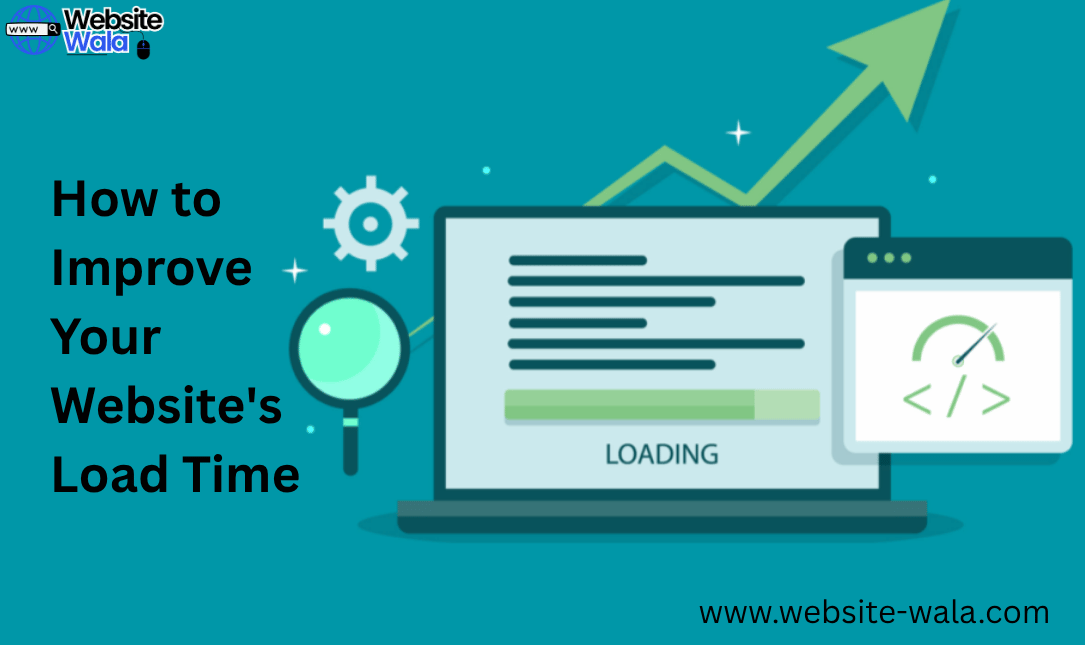
Learn How to Improve Your Website's Load Time with proven optimization strategies like image compression, caching, and code minification to speed up your website.
How to Improve Your Website's Load Time: A Complete Guide
In today’s fast-paced digital world, users expect websites to load instantly. A slow-loading website can frustrate visitors, hurt your SEO rankings, and reduce conversions. Understanding How to Improve Your Website's Load Time is essential for creating a smooth user experience and improving your online presence.
This comprehensive guide will walk you through actionable steps and website optimization strategies to increase loading speed, improve website performance, and ensure your visitors stay engaged.
Why Website Load Time Matters
Before learning How to Improve Your Website's Load Time, it’s important to understand why it matters. Studies show that users tend to leave a page if it takes more than three seconds to load. Google also considers website load time as a key ranking factor for SEO. A faster website can:
-
Enhance user experience
-
Increase conversion rates
-
Reduce bounce rates
-
Improve search engine rankings
When you speed up your website, you don’t just make it more appealing to visitors — you make it more attractive to search engines as well.
Step 1: Optimize Images for Faster Loading
One of the most effective ways to learn How to Improve Your Website's Load Time is by optimizing your images. Large image files can drastically slow down your site’s performance. To improve website performance, follow these best practices:
-
Compress images: Use tools like TinyPNG or ImageOptim to reduce file size without compromising quality.
-
Choose the right format: Use JPEGs for photos, PNGs for images with transparency, and WebP for modern browsers.
-
Implement lazy loading: This technique ensures that images load only when they appear on the user’s screen.
By taking the time to optimize images, you can significantly increase loading speed and provide a smoother browsing experience.
Step 2: Minify Code (HTML, CSS, and JavaScript)
Another key method in How to Improve Your Website's Load Time is to minify code. Unnecessary characters, spaces, and line breaks in your HTML, CSS, and JavaScript files can slow down your site.
You can improve website performance by using tools like:
-
UglifyJS for JavaScript
-
CSSNano for CSS
-
HTMLMinifier for HTML
Minifying your code ensures your website loads more efficiently and consumes fewer server resources, helping to speed up your website.
Step 3: Enable Caching for Returning Visitors
To truly master How to Improve Your Website's Load Time, you must enable caching. Caching stores copies of your web pages and assets in a visitor’s browser or a server’s memory. When a returning visitor accesses your site, the cached content loads much faster.
You can use:
-
Browser caching: Set expiration headers so browsers can store static files.
-
Server-side caching: Tools like Varnish or Redis can help store dynamic content.
-
Plugin-based caching: For WordPress, popular plugins include WP Super Cache and W3 Total Cache.
When you enable caching, you can drastically increase loading speed and reduce the time it takes for pages to appear on users’ screens.
Step 4: Use a Content Delivery Network (CDN)
A content delivery network (CDN) is one of the most powerful website optimization strategies to speed up your website. A CDN stores copies of your website’s static files across multiple global servers. When a user visits your site, the content is delivered from the nearest server, reducing latency.
Popular CDNs include:
-
Cloudflare
-
Amazon CloudFront
-
Akamai
-
Fastly
Integrating a CDN is a proven technique when exploring How to Improve Your Website's Load Time and helps ensure consistent speed for users worldwide.
Step 5: Reduce Server Response Time
Even with optimized code and caching, your hosting environment plays a critical role in website load time. Slow servers lead to slow websites, no matter how well optimized your site is.
To improve website performance and increase loading speed:
-
Choose a reliable hosting provider.
-
Upgrade to a VPS or dedicated server if needed.
-
Monitor server performance regularly.
Reducing your server response time ensures your website responds quickly to user requests, a major factor in How to Improve Your Website's Load Time.
Step 6: Limit HTTP Requests
Every element on a webpage — images, scripts, stylesheets, and fonts — requires an HTTP request. The more requests your site makes, the longer it takes to load. To speed up your website, aim to reduce the number of requests by:
-
Combining CSS and JavaScript files.
-
Using CSS sprites for icons.
-
Eliminating unnecessary plugins and scripts.
Reducing HTTP requests is an effective website optimization strategy to improve website performance and increase loading speed.
Step 7: Implement Gzip or Brotli Compression
Gzip and Brotli are file compression methods that reduce the size of your website files before they’re sent to the browser. This is another critical step in How to Improve Your Website's Load Time.
By enabling compression on your server, you can:
-
Reduce bandwidth usage.
-
Decrease the time needed to transfer data.
-
Speed up your website for users across all devices.
Most modern web servers like Apache and Nginx support Gzip or Brotli compression.
Step 8: Monitor and Test Your Website Performance
To truly master How to Improve Your Website's Load Time, continuous monitoring is essential. Use tools such as:
-
Google PageSpeed Insights
-
GTmetrix
-
Pingdom Tools
-
WebPageTest.org
These tools analyze your site and offer insights into what’s slowing it down. Regular testing allows you to refine your website optimization strategies and maintain top performance.
Step 9: Optimize Web Fonts and Scripts
Fonts and third-party scripts can silently hurt your website load time. While they may enhance design and functionality, too many external calls can slow your website. To improve website performance:
-
Limit the number of font families and weights.
-
Use system fonts where possible.
-
Load third-party scripts asynchronously or defer them.
Balancing aesthetics and functionality is key in How to Improve Your Website's Load Time.
Step 10: Keep Your Website Clean and Updated
Lastly, maintaining your website regularly ensures optimal performance. Outdated themes, plugins, or CMS versions can slow down your site and pose security risks.
To speed up your website and increase loading speed:
-
Delete unused plugins and media files.
-
Keep your CMS, themes, and plugins updated.
-
Audit your website quarterly for performance issues.
A clean, updated website is the foundation of long-term success in How to Improve Your Website's Load Time.
Conclusion: How to Improve Your Website's Load Time for Lasting Results
Learning How to Improve Your Website's Load Time isn’t just about ticking off a checklist — it’s about creating a better experience for your visitors and improving your online presence. By following these website optimization strategies—from optimizing images and minifying code to enabling caching and using a content delivery network—you’ll dramatically increase loading speed and improve website performance.
Remember, a fast-loading website is not only good for users but also essential for SEO success. Implement these steps today, and watch your website climb higher in rankings while keeping your visitors happy and engaged.