Build Your Dream Website – with Website Wala



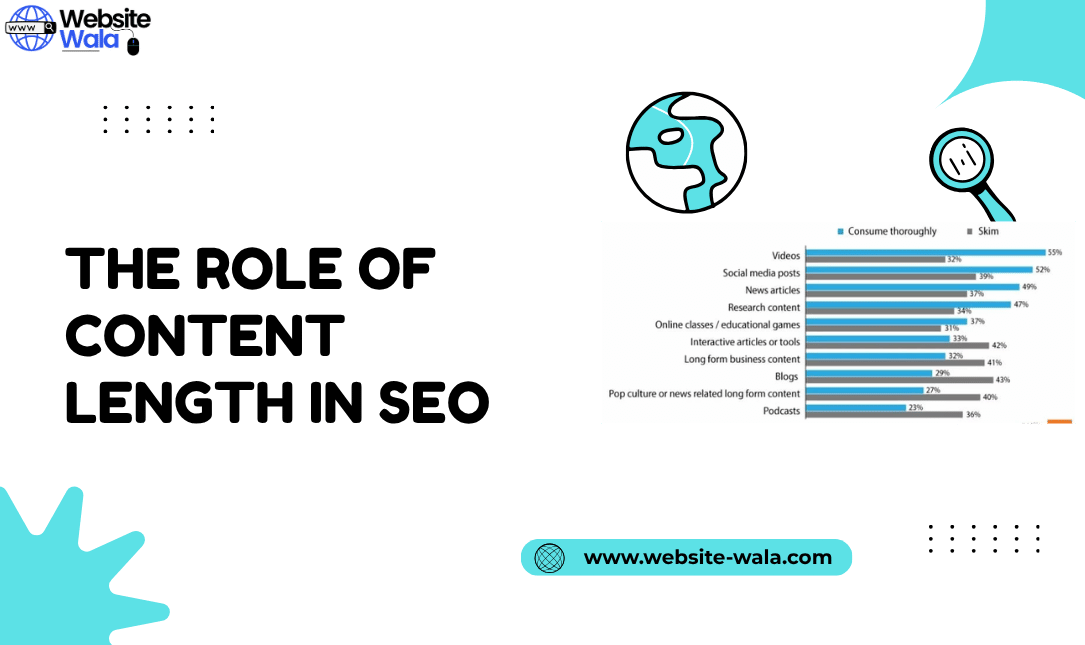
Discover The Role of Content Length in SEO and learn how word count impacts website rankings, user engagement, and overall search engine optimization.
The Role of Content Length in SEO
In the evolving world of digital marketing, The Role of Content Length in SEO has become one of the most discussed topics among marketers and content creators. While algorithms and ranking factors constantly change, the relationship between content length, quality content, and website rankings remains critical to achieving strong search engine optimization results. Understanding how word count influences visibility and user engagement can help you refine your content marketing and SEO strategies for better online presence.
Understanding The Role of Content Length in SEO
At its core, The Role of Content Length in SEO revolves around the idea that longer, more comprehensive content tends to perform better in search engine rankings. This doesn’t mean writing endless paragraphs without purpose—it means offering depth, context, and value.
Search engines like Google prioritize quality content that thoroughly addresses user intent. A longer word count allows for more detailed explanations, better keyword usage, and more opportunities for internal and external linking—all essential for content optimization and improved website visibility.
Why Content Length Matters in Search Engine Optimization
When analyzing The Role of Content Length in SEO, it’s important to understand why search engines might prefer longer content. The reason lies in user engagement and information depth.
Long-form articles often keep readers on a page longer, lowering bounce rates and signaling to Google that the content is valuable. Additionally, detailed content is more likely to attract backlinks, another key ranking factor in search engine optimization.
For example, an article with 1,500+ words that fully explores a topic tends to outperform shorter posts in website rankings because it provides more substance. This doesn’t mean every post must be long; instead, you should balance word count with clarity and purpose.
Finding the Ideal Word Count for SEO
Determining the ideal content length is not a one-size-fits-all process. The Role of Content Length in SEO depends on your niche, target audience, and competition.
Studies have shown that top-ranking pages typically feature between 1,000 and 2,500 words. However, search engine optimization is about quality content, not just quantity. A 500-word article that precisely answers a query can rank higher than a 2,000-word one filled with fluff.
To optimize your content marketing efforts, focus on:
-
Matching the word count to the complexity of the topic.
-
Ensuring each paragraph adds value.
-
Using relevant keywords naturally.
-
Enhancing readability with subheadings and visuals.
This balanced approach aligns your content optimization with SEO best practices.
How Longer Content Influences User Engagement
A critical aspect of The Role of Content Length in SEO is its effect on user engagement. Longer content provides more opportunities to connect with readers through storytelling, examples, and insights.
When readers spend more time engaging with your post—scrolling, clicking, or commenting—it signals to search engines that your content is relevant. These behavioral signals contribute to better search engine rankings.
Additionally, longer content often ranks for multiple long-tail keywords, expanding your website visibility and boosting your online presence. By combining SEO tips with a strategic approach to content length, you can keep users interested while satisfying search algorithms.
Balancing Content Length and Quality Content
Although The Role of Content Length in SEO highlights the benefits of writing longer pieces, it’s vital to remember that quality content outweighs quantity. A 3,000-word post filled with redundant information can harm your search engine optimization instead of improving it.
Effective content optimization focuses on clarity, depth, and value. Each section of your article should serve a purpose—educate, inform, or solve a problem. The key is to deliver meaningful information while maintaining readability.
Avoid keyword stuffing or overusing “The Role of Content Length in SEO” excessively. Instead, let the keyword flow naturally within your narrative, maintaining a balanced word count that supports comprehension and user engagement.
SEO Tips for Writing High-Performing Long-Form Content
If you want to make the most of The Role of Content Length in SEO, consider these proven SEO tips:
-
Research Before Writing: Use keyword research tools to understand what your audience is searching for. This ensures your content marketing aligns with real user intent.
-
Structure Your Content: Divide long articles into clear sections with descriptive headings. This enhances readability and search engine optimization.
-
Use Internal Linking: Link to related pages or blog posts to strengthen your site’s structure and boost website rankings.
-
Incorporate Visuals: Images, infographics, and videos increase user engagement and make longer content easier to digest.
-
Update Regularly: Revisit your long-form articles periodically to ensure the information stays relevant. Fresh updates help maintain website visibility.
-
Optimize for Featured Snippets: Use concise summaries and bullet points to improve your chances of being highlighted in search results.
By applying these content optimization methods, your long-form content can become a cornerstone of your digital marketing strategie.
The Role of Content Length in SEO and Content Marketing Success
In modern content marketing, The Role of Content Length in SEO plays a significant part in driving visibility, authority, and trust. Brands that consistently publish detailed, well-structured, and informative posts build credibility and attract loyal audiences.
Well-researched long-form content helps position your brand as a thought leader. Moreover, it integrates seamlessly with broader digital marketing strategie like email campaigns, social media promotion, and backlink outreach—all of which amplify your online presence.
By aligning word count with the audience’s informational needs, you create quality content that enhances both user engagement and search engine rankings.
Final Thoughts on The Role of Content Length in SEO
Ultimately, The Role of Content Length in SEO is about finding harmony between comprehensive coverage and engaging readability. While longer content often performs better in search engine optimization, the ultimate goal should always be to provide quality content that satisfies user intent.
When done right, strategic content length contributes to improved website rankings, higher user engagement, and sustained website visibility. As part of your broader digital marketing strategie, focus on producing content that informs, inspires, and converts—because great SEO isn’t just about word count; it’s about delivering lasting value.