Build Your Dream Website – with Website Wala



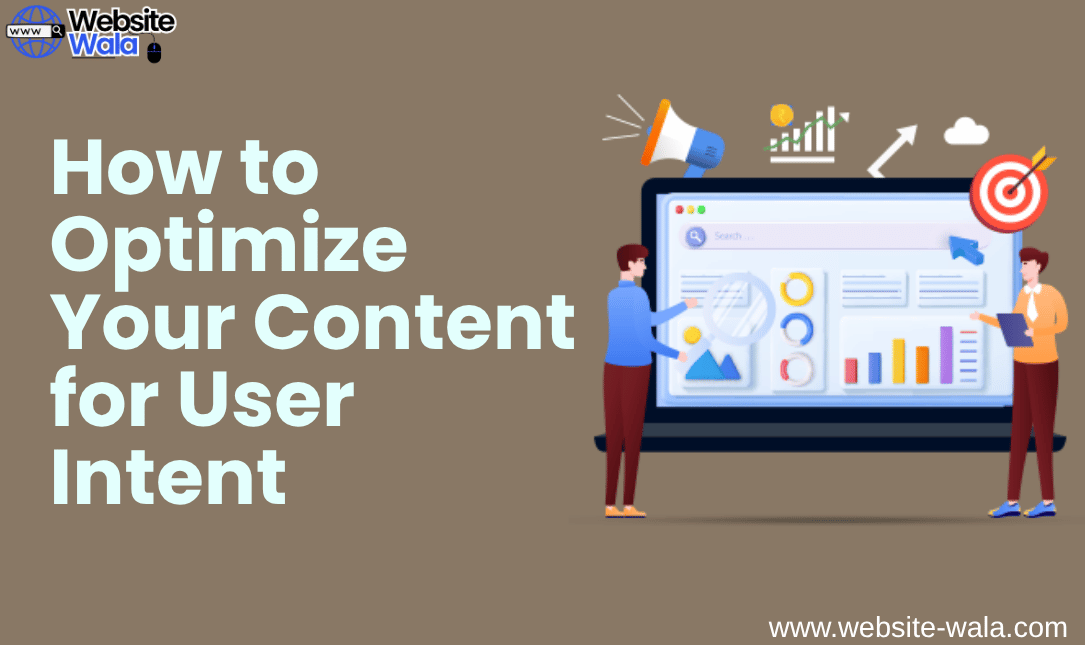
Learn How to Optimize Your Content for User Intent with proven SEO strategies to improve audience engagement, organic traffic, and user experience.
Introduction: Why User Intent Matters in Content Optimization
In the ever-evolving landscape of digital marketing, understanding How to Optimize Your Content for User Intent has become essential for driving success. Gone are the days when keyword stuffing could secure a top position on search engines. Today, search engine optimization (SEO) is more about understanding the why behind a search — the user intent.
Whether users are looking for information, comparing options, or ready to buy, your content must meet their expectations. Mastering How to Optimize Your Content for User Intent ensures your website provides value, enhances user experience, and generates sustainable organic traffic.
Understanding User Intent: The Foundation of Effective Content Optimization
Before diving into How to Optimize Your Content for User Intent, it’s important to understand what user intent means. In simple terms, user intent (also known as search intent) refers to the goal a user has when typing a query into a search engine.
There are generally three types of search intent:
-
Informational Intent: Users want to learn something (e.g., “What is user intent in SEO?”).
-
Navigational Intent: Users are searching for a specific website or brand (e.g., “YouTube login”).
-
Transactional Intent: Users intend to make a purchase or take action (e.g., “Buy noise-canceling headphones”).
Recognizing these intents helps you craft engaging content that aligns with what users truly want, which is the essence of How to Optimize Your Content for User Intent.
Step 1: Analyze Search Queries to Identify User Intent
To begin How to Optimize Your Content for User Intent, start by researching the search queries your audience uses. Tools like Google Search Console, SEMrush, and Ahrefs can help uncover keyword patterns and intent behind them.
For example, if your audience frequently searches “how to improve website optimization,” the intent is likely informational. Your strategy should then focus on creating valuable content that educates readers rather than pushing sales.
This approach ensures your content aligns with SEO strategies that focus on satisfying the user’s needs while improving audience engagement.
Step 2: Map Content to the Buyer’s Journey
A core part of How to Optimize Your Content for User Intent involves mapping your content to the buyer’s journey. Each stage of the funnel — awareness, consideration, and decision — corresponds to a different type of user intent.
-
Awareness Stage: Users seek knowledge. Create blog posts, guides, and infographics to offer helpful information.
-
Consideration Stage: Users compare solutions. Publish case studies, detailed comparisons, or product features.
-
Decision Stage: Users are ready to act. Provide testimonials, demos, and clear calls-to-action.
By mapping content to intent, you create a seamless experience that supports effective content optimization and website optimization.
Step 3: Create Engaging and Valuable Content
Creating valuable content is at the heart of How to Optimize Your Content for User Intent. Search engines like Google reward pages that offer real value to users. To achieve this:
-
Write engaging content that directly answers user questions.
-
Use clear headings and bullet points for easy readability.
-
Incorporate data, examples, and visuals to increase audience engagement.
-
Keep content up to date with current trends and insights.
When users find your content helpful and relevant, they stay longer on your site, improving user experience and boosting your rankings through positive engagement signals.
Step 4: Optimize On-Page Elements for Search Intent
Another vital aspect of How to Optimize Your Content for User Intent is optimizing on-page SEO elements. Every page on your website should clearly communicate its purpose to both users and search engines. Here’s how to do it:
-
Title Tags & Meta Descriptions: Include the target keyword naturally while emphasizing value.
-
Headers (H1, H2, H3): Use structured headings to improve readability and relevance.
-
Internal Linking: Guide users to related pages that match their evolving search intent.
-
Images and Alt Text: Use descriptive alt text for better accessibility and SEO strategies.
When done correctly, on-page optimization enhances search engine optimization performance and strengthens website optimization overall.
Step 5: Improve User Experience for Better Engagement
A major factor in How to Optimize Your Content for User Intent is enhancing the user experience (UX). A well-optimized website ensures users can quickly find what they need without frustration.
To improve UX:
-
Ensure fast loading times and mobile responsiveness.
-
Simplify navigation to help users locate information easily.
-
Use visuals, spacing, and typography that encourage readability.
-
Include CTAs that match the user intent behind each page.
When visitors enjoy their experience, audience engagement rises, and organic traffic tends to grow through improved satisfaction metrics.
Step 6: Use Data to Refine and Evolve Your Strategy
How to Optimize Your Content for User Intent is not a one-time task — it’s a continuous process. Monitor analytics to understand how your content performs and where improvements are needed.
Key metrics to track include:
-
Bounce rate and dwell time for engagement insights.
-
Click-through rate (CTR) for title and meta description effectiveness.
-
Conversion rates to measure how well your content meets intent.
Use this data to refine your SEO strategies and continually enhance content optimization efforts.
Step 7: Align SEO Strategies with Human-Centered Content
Modern search engine optimization is no longer about algorithms alone — it’s about people. The key to mastering How to Optimize Your Content for User Intent lies in merging technical SEO with human empathy.
That means:
-
Writing for readers first, search engines second.
-
Incorporating natural language and conversational tones.
-
Using multimedia (videos, infographics, podcasts) to make engaging content more interactive.
When your strategy focuses on human behavior and user intent, your site will naturally perform better in search results.
Conclusion: Turning Intent into Lasting Engagement
Understanding How to Optimize Your Content for User Intent is one of the most powerful skills in modern SEO strategies. By aligning your content with what users are truly searching for, you can boost organic traffic, improve user experience, and drive meaningful audience engagement.
Remember, effective content optimization isn’t just about keywords — it’s about creating valuable content that resonates with your audience’s needs. When your content satisfies search intent, your brand earns trust, authority, and long-term growth in the competitive world of search engine optimization.