Build Your Dream Website – with Website Wala



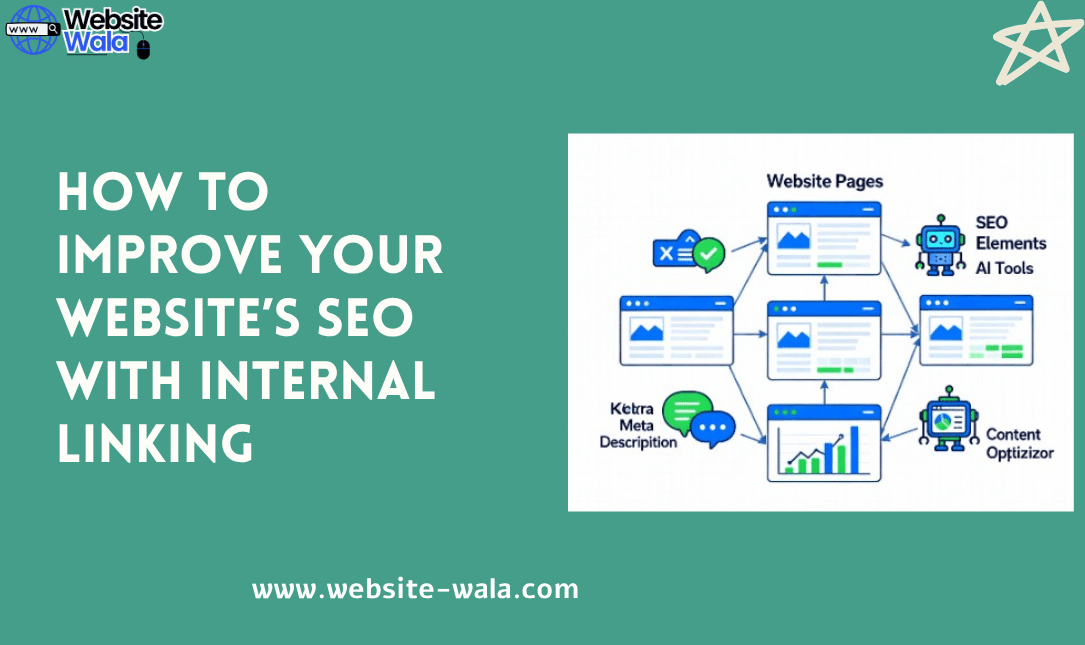
Learn How to Improve Your Website’s SEO with Internal Linking using proven strategies, best practices, and SEO tips to boost website ranking and traffic.
How to Improve Your Website’s SEO with Internal Linking
Understanding How to Improve Your Website’s SEO with Internal Linking is one of the most powerful and often overlooked SEO strategies. Internal linking is more than just connecting one page to another; it’s a structured approach that strengthens your site architecture, enhances on-page SEO, and boosts overall website optimization. When done correctly, internal linking can dramatically improve website ranking, user experience, and website traffic.
In this comprehensive SEO guide, you’ll learn the importance of internal links, how to build an effective structure, and the best internal linking techniques to improve SEO naturally.
What Is Internal Linking?
Before diving into How to Improve Your Website’s SEO with Internal Linking, it’s essential to understand what internal linking actually means. Internal links are hyperlinks that connect one page on your website to another page on the same domain. These links help users and search engines navigate your site more efficiently.
For example, linking a blog post about “keyword research” to another about “on-page SEO” helps both readers and search engines discover related content. This simple yet strategic technique plays a major role in search engine optimization.
Why Internal Linking Matters for SEO
When considering How to Improve Your Website’s SEO with Internal Linking, it’s vital to grasp its role in website SEO. Internal linking is one of the most effective on-page SEO methods to:
-
Distribute Link Equity:
Internal links pass authority from one page to another, helping important pages rank higher in search results. -
Enhance Crawling and Indexing:
Search engines use internal links to discover and index new pages, ensuring no valuable content goes unnoticed. -
Improve User Experience:
Smart internal linking strategies guide visitors through your content logically, increasing dwell time and engagement. -
Boost Keyword Relevance:
When you use targeted anchor text, internal links strengthen the keyword association for specific pages, helping them rank better.
If you want to improve SEO and website ranking, internal linking should be at the heart of your SEO strategy.
How to Improve Your Website’s SEO with Internal Linking: Step-by-Step
Let’s break down How to Improve Your Website’s SEO with Internal Linking into actionable steps. These internal linking best practices ensure your website optimization efforts yield measurable results.
1. Build a Strong Site Structure
The first step in learning How to Improve Your Website’s SEO with Internal Linking is to establish a logical site hierarchy. Your homepage should link to key category pages, which then connect to subpages or blog posts. This pyramid-like structure ensures that link equity flows evenly throughout your website, boosting website SEO.
Tip: Use a “topic cluster” model—create pillar content for broad topics and interlink related subtopics.
2. Use Descriptive Anchor Text
Anchor text is the clickable text in a hyperlink. Using descriptive, keyword-rich anchor text helps both users and search engines understand the context of the linked page. For instance, instead of writing “click here,” use something like “learn more about internal linking techniques.”
Best Practice: Keep anchor text natural and avoid over-optimization to maintain the balance between SEO and readability.
3. Link to High-Value Pages
A crucial internal linking strategy involves linking from high-authority pages to important ones that need a ranking boost. This distributes link equity effectively across your website, strengthening overall search engine optimization.
Example: If your blog post on “SEO basics” has gained backlinks, linking it to your “advanced SEO guide” helps transfer some of that authority.
4. Update Old Content with New Internal Links
Regularly updating older pages is key to website optimization. Whenever you publish new content, find relevant older posts and add internal links pointing to the new article. This signals to search engines that your content is interconnected and up to date.
SEO Tip: Use internal linking tools or plugins (like Yoast SEO or Rank Math) to identify opportunities for adding links.
5. Avoid Overlinking
While it’s tempting to add multiple internal links on a single page, moderation is essential. Too many links can dilute link equity and confuse users. The goal of How to Improve Your Website’s SEO with Internal Linking isn’t quantity—it’s strategic quality.
Best Practice: Aim for 3–5 internal links per 1,000 words, depending on content length and relevance.
6. Leverage Footer and Navigation Links
Your site’s header, footer, and sidebar can include useful internal links to key sections such as contact pages, product categories, or cornerstone content. These areas reinforce on-page SEO and improve user navigation.
However, avoid cluttering these areas with too many links—focus on relevance and user experience to maintain strong website optimization.
7. Use Tools to Audit Your Internal Linking Structure
Understanding How to Improve Your Website’s SEO with Internal Linking also means monitoring your link performance. Tools like Google Search Console, Ahrefs, and Screaming Frog can help identify broken links, orphan pages (pages with no internal links), and weak link distribution.
SEO Strategy: Regular audits ensure your internal linking techniques remain effective and aligned with your overall SEO goals.
Internal Linking Best Practices to Improve SEO
Following internal linking best practices ensures your efforts lead to measurable growth in website ranking and website traffic. Keep these guidelines in mind:
-
Keep it relevant: Only link to pages that add real value to the reader.
-
Use varied anchor text: Don’t use the same anchor repeatedly—it looks spammy to search engines.
-
Link deep: Avoid always linking to your homepage or main category pages; link to deeper pages to spread link equity.
-
Fix broken links: Regularly check for and repair any broken internal links to maintain site integrity.
-
Monitor results: Use analytics tools to track performance and refine your SEO strategy.
By following these internal linking best practices, you create a strong foundation for long-term search engine optimization success.
The Role of Internal Linking in Website Ranking
How to Improve Your Website’s SEO with Internal Linking isn’t just about adding links—it’s about building relationships between content pieces. Internal linking helps Google understand which pages on your site are most valuable, improving their visibility in search results.
Moreover, effective internal linking strategies reduce bounce rates, enhance user engagement, and guide visitors toward conversions—all of which contribute to improved website ranking and website traffic.
Common Mistakes to Avoid
While learning How to Improve Your Website’s SEO with Internal Linking, be cautious of these common pitfalls:
-
Using irrelevant links: Linking unrelated pages confuses users and harms SEO.
-
Over-optimizing anchor text: Using the same keyword repeatedly can trigger penalties.
-
Ignoring orphan pages: Pages with no internal links are nearly invisible to search engines.
-
Forgetting mobile optimization: Ensure links are easily clickable on mobile devices for better on-page SEO performance.
Conclusion: Mastering How to Improve Your Website’s SEO with Internal Linking
Mastering How to Improve Your Website’s SEO with Internal Linking is one of the smartest ways to boost your SEO strategy. By strategically using internal links, building a solid site structure, and following internal linking best practices, you can significantly improve SEO, enhance user experience, and drive sustainable website traffic.