Build Your Dream Website – with Website Wala



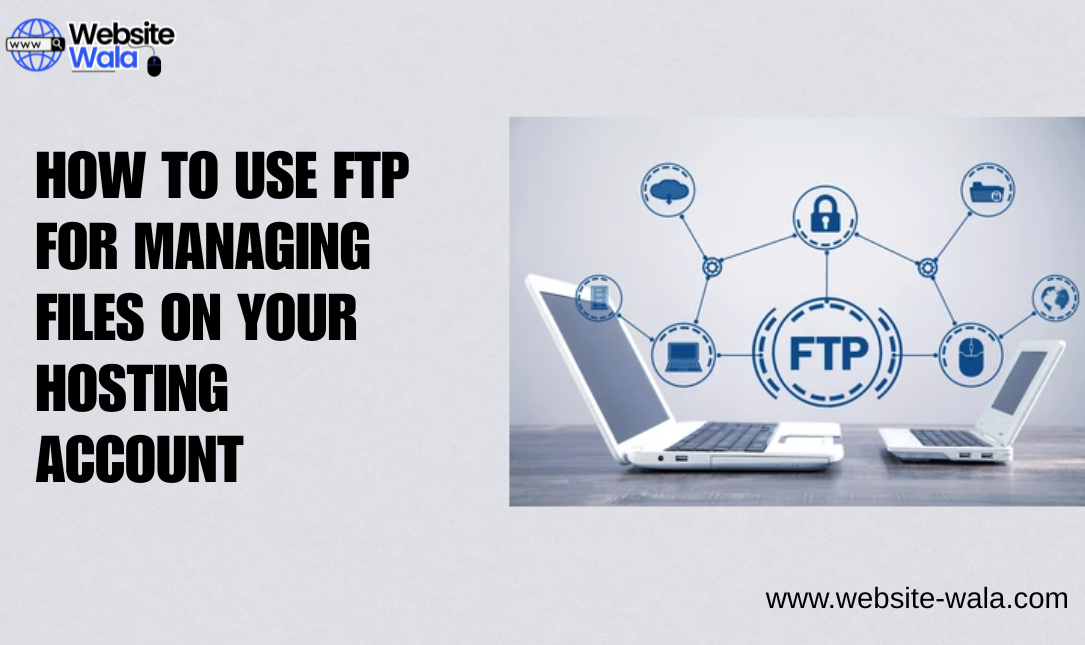
Learn How to Use FTP for Managing Files on Your Hosting Account efficiently with this step-by-step guide on uploading, downloading, and organizing website files.
Introduction: Understanding How to Use FTP for Managing Files on Your Hosting Account
If you own a website, you’ll need a reliable and efficient way to upload, edit, and organize your site’s files on your hosting account. Knowing How to Use FTP for Managing Files on Your Hosting Account is one of the most effective methods to handle this. FTP, or File Transfer Protocol, allows you to connect your local computer directly to your web hosting server, enabling seamless file management, uploading files, and downloading files.
In this guide, you’ll learn How to Use FTP for Managing Files on Your Hosting Account, step by step — from establishing an FTP server connection to performing advanced file organization for efficient website management.
What Is FTP and Why Is It Important for File Management?
File Transfer Protocol (FTP) is a standard method used to transfer data between a client (your computer) and a server (your hosting account). When you learn How to Use FTP for Managing Files on Your Hosting Account, you gain full control over your website’s content without relying solely on browser-based tools like cPanel or file managers.
FTP is essential because it allows:
-
Fast and reliable uploading and downloading files
-
Easy organizing of website content
-
Simple backup and restore of your site
-
Direct access to hidden or system files that may not be visible in your hosting dashboard
Using FTP is ideal for developers, designers, and site owners who want full control over their web hosting environment.
Step 1: Prepare to Use FTP for Managing Files on Your Hosting Account
Before you can start using FTP, you’ll need to prepare a few essentials:
-
FTP Client Software:
You’ll need an application that supports File Transfer Protocol. Popular options include:-
FileZilla (free and open-source)
-
WinSCP (Windows users)
-
Cyberduck (Mac users)
-
-
FTP Account Credentials:
Your hosting provider will supply or allow you to create FTP login details, which include:-
FTP host or server connection address (usually ftp.yourdomain.com)
-
Username and password
-
Port number (default is 21 for FTP)
-
Once you have these details, you’re ready to connect to your hosting server and begin managing files.
Step 2: Connecting to the Server via FTP
The next step in How to Use FTP for Managing Files on Your Hosting Account is to establish a secure server connection. Open your chosen FTP client and enter the login credentials provided by your hosting company.
Here’s how:
-
Launch your FTP client (e.g., FileZilla).
-
In the Host field, enter your domain or server IP.
-
Enter your FTP username and password.
-
Use port 21 (for standard FTP) or 22 (for SFTP – Secure File Transfer Protocol).
-
Click Connect.
Once connected, you’ll see two panels:
-
The left panel shows your local files.
-
The right panel shows files stored on your hosting account.
This visual structure makes file management intuitive, allowing you to drag and drop files easily between your computer and server.
Step 3: Uploading Files to Your Hosting Account
After establishing the FTP server connection, the most common task is uploading files. This process allows you to add website pages, images, scripts, or backups directly to your web hosting server.
To upload files:
-
Navigate to your website’s public directory (often named
/public_html/or/www/). -
On your local panel, locate the files you wish to upload.
-
Drag and drop the files from the left to the right panel.
The transfer will begin immediately, and progress indicators will display the uploading files status. Once complete, your new files will be live on your website.
Uploading files through FTP ensures faster performance, especially for large files or multiple uploads at once — making it ideal for developers performing frequent website management tasks.
Step 4: Downloading Files from the Hosting Server
Another key part of How to Use FTP for Managing Files on Your Hosting Account is downloading files. This function allows you to create local backups or edit website files offline before re-uploading them.
To download files:
-
In your FTP client, select the files or folders from your hosting account.
-
Drag them to your local directory panel.
-
Wait for the transfer to complete.
Downloading is especially useful for troubleshooting issues or creating offline backups of your website content.
Step 5: Organizing Website Content and File Structure
Efficient file organization is critical to successful website management. FTP makes it easy to rename, move, delete, or create folders within your hosting account.
Here are some tips for organizing your website using FTP:
-
Group related files in dedicated folders (e.g.,
/images/,/scripts/,/styles/). -
Use descriptive file names for clarity.
-
Regularly remove outdated or unused files to keep your server connection efficient.
-
Maintain backups in a separate directory.
When you understand How to Use FTP for Managing Files on Your Hosting Account, organizing files becomes straightforward and enhances your overall file management workflow.
Step 6: Securing Your FTP Connection
Security is vital when dealing with File Transfer Protocol connections. Always use SFTP (Secure File Transfer Protocol) when available, as it encrypts your data during server connection, preventing unauthorized access.
Best practices for secure FTP usage include:
-
Avoid public Wi-Fi when connecting to your hosting account.
-
Regularly update your FTP client.
-
Use strong passwords and enable two-factor authentication if supported.
-
Disconnect when not in use to minimize exposure.
By following these security steps, you ensure that learning How to Use FTP for Managing Files on Your Hosting Account not only improves productivity but also safeguards your data.
Troubleshooting Common FTP Issues
While FTP is generally reliable, users sometimes encounter problems when connecting to the server or transferring files. Here’s how to fix common issues:
-
Connection Timeout: Check your firewall or ensure your FTP server address is correct.
-
Authentication Failed: Verify your username and password.
-
Failed Transfers: Ensure file permissions allow upload or download access.
-
Permission Denied Errors: Adjust file permissions via your hosting control panel.
Troubleshooting is part of mastering How to Use FTP for Managing Files on Your Hosting Account, ensuring smooth and consistent operations.
Conclusion: Mastering How to Use FTP for Managing Files on Your Hosting Account
Learning How to Use FTP for Managing Files on Your Hosting Account empowers you with complete control over your website management tasks. From uploading and downloading files to advanced file organization, FTP provides flexibility, speed, and precision that web-based tools can’t match.
Whether you’re updating your website content, performing file management, or maintaining your web hosting account, understanding File Transfer Protocol gives you the confidence to handle every aspect of your site directly.