Build Your Dream Website – with Website Wala



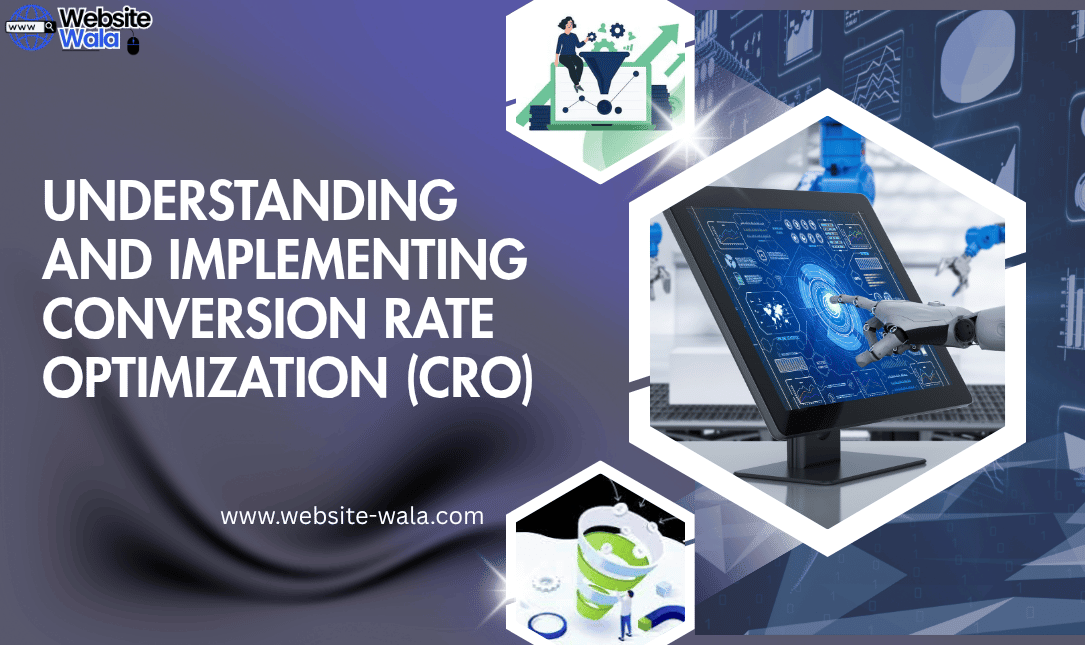
Learn Understanding and Implementing Conversion Rate Optimization (CRO) to boost website performance, increase conversions, and drive more sales effectively.
Understanding and Implementing Conversion Rate Optimization (CRO)
In today’s competitive digital landscape, every click counts. Businesses spend vast resources driving traffic to their websites, but if visitors don’t take action, those efforts fall flat. This is where Understanding and Implementing Conversion Rate Optimization (CRO) becomes crucial. CRO focuses on turning visitors into customers, subscribers, or leads — maximizing the value of your existing traffic without increasing ad spend.
This comprehensive CRO guide will walk you through the fundamentals, strategies, and best practices for Understanding and Implementing Conversion Rate Optimization (CRO) so you can boost website performance and increase conversions effectively.
What Is Conversion Rate Optimization (CRO)?
Before diving deep into Understanding and Implementing Conversion Rate Optimization (CRO), it’s important to define what CRO actually means. Conversion rate optimization is the systematic process of enhancing a website’s user experience to encourage visitors to take a desired action. These actions could include making a purchase, signing up for a newsletter, filling out a contact form, or downloading a resource.
The goal of website conversion optimization is not just about increasing traffic but about making existing traffic more valuable. By applying CRO techniques, businesses can maximize conversion rates and drive more sales without additional marketing costs.
Why Understanding and Implementing Conversion Rate Optimization (CRO) Matters
Understanding and Implementing Conversion Rate Optimization (CRO) helps bridge the gap between traffic generation and actual results. A website may attract thousands of visitors daily, but if only a small fraction convert, the potential is wasted. Effective CRO strategies ensure that every visitor has a smoother path toward conversion.
Here’s why mastering Understanding and Implementing Conversion Rate Optimization (CRO) matters:
-
Better ROI – You get more results from existing traffic.
-
Enhanced User Experience – Optimization leads to faster, more user-friendly websites.
-
Data-Driven Decisions – CRO relies on analytics and A/B testing, eliminating guesswork.
-
Increased Customer Retention – When users have a seamless experience, they return more often.
-
Competitive Advantage – Implementing conversion rate best practices gives your brand an edge.
The Core Principles of Understanding and Implementing Conversion Rate Optimization (CRO)
Every CRO guide should start with foundational principles that define how to think strategically about website improvement. The process of Understanding and Implementing Conversion Rate Optimization (CRO) revolves around three main pillars:
-
Understanding User Behavior
Before you can improve conversion rates, you need to understand your users. Tools like heatmaps, analytics dashboards, and user session recordings reveal how visitors interact with your site. -
Testing and Experimentation
A key aspect of website optimization involves constant testing. A/B and multivariate tests help you compare design elements, CTAs, and headlines to determine what performs best. -
Iterative Improvement
Conversion rate optimization is not a one-time project. It’s an ongoing process of analyzing, testing, and refining to continually boost website performance.
How to Implement Conversion Rate Optimization (CRO)
To successfully execute Understanding and Implementing Conversion Rate Optimization (CRO), follow these practical steps that align with proven CRO strategies.
1. Analyze Your Data
Start by examining analytics data to identify weak spots in your conversion funnel. Look at bounce rates, exit pages, and user behavior patterns. This insight helps pinpoint areas where users drop off.
2. Create Hypotheses
Based on data, form hypotheses for improvement. For instance, if users abandon their cart frequently, your hypothesis might be: “Reducing checkout steps will increase conversions.”
3. Run A/B Tests
Implement A/B testing to compare different design or content variations. Testing is a cornerstone of Understanding and Implementing Conversion Rate Optimization (CRO), allowing you to validate changes scientifically.
4. Optimize Key Pages
Focus on landing pages, product pages, and forms. These high-impact areas often yield the greatest results in website conversion optimization.
5. Improve Load Speed and Mobile Experience
A slow or unresponsive site deters conversions. Enhancing performance and mobile usability can boost website performance significantly.
6. Use Persuasive Copy and Visuals
Strong headlines, clear CTAs, and high-quality images make users more likely to act. Use psychological triggers like urgency and social proof to increase conversions.
7. Evaluate and Repeat
After implementing changes, review results and continue testing. CRO techniques thrive on iteration — every small improvement compounds over time.
Proven CRO Strategies for Success
Here are some of the most effective CRO strategies used by leading brands to maximize conversion rates and drive more sales:
-
Simplify Navigation: Clear, intuitive navigation reduces user friction.
-
Optimize Call-to-Actions: Use action-driven words like “Get Started” or “Claim Your Offer.”
-
Leverage Social Proof: Testimonials and reviews build credibility.
-
Personalize User Experiences: Tailor content and offers based on user behavior.
-
Utilize Exit-Intent Popups: Capture leads before they leave your site.
-
Optimize Forms: Shorter, cleaner forms convert better.
-
Retarget Visitors: Use retargeting campaigns to bring users back for conversion.
Applying these CRO tips ensures you’re addressing every aspect of user behavior that impacts conversion.
Measuring the Success of Your CRO Efforts
Once you’ve started Understanding and Implementing Conversion Rate Optimization (CRO), you need to track progress effectively. Key performance indicators (KPIs) to measure include:
-
Conversion Rate: Percentage of visitors completing desired actions.
-
Bounce Rate: Lower bounce rates indicate better engagement.
-
Average Session Duration: Longer sessions often signal higher interest.
-
Revenue per Visitor (RPV): Directly ties CRO to financial performance.
-
Form Completion Rate: Tracks how well lead forms convert.
Monitoring these metrics helps determine whether your website optimization efforts are paying off.
Common Mistakes in Conversion Rate Optimization
Even seasoned marketers can misstep when Understanding and Implementing Conversion Rate Optimization (CRO). Avoid these common pitfalls:
-
Skipping Research: Guessing what works instead of analyzing data.
-
Making Too Many Changes at Once: This blurs which factors drive results.
-
Neglecting Mobile Users: Over half of web traffic comes from mobile.
-
Ignoring Post-Conversion Experience: CRO doesn’t end at the purchase — ensure follow-up and retention.
Avoiding these mistakes helps ensure your CRO strategies yield consistent, measurable improvements.
Conversion Rate Best Practices
When Understanding and Implementing Conversion Rate Optimization (CRO), follow these universal conversion rate best practices:
-
Prioritize user intent in design decisions.
-
Ensure content clarity and readability.
-
Focus on emotional triggers like trust, urgency, and value.
-
Optimize visuals for both aesthetics and load speed.
-
Continuously test, analyze, and refine.
Applying these CRO techniques ensures your approach remains data-driven and customer-focused.
Conclusion: Mastering Understanding and Implementing Conversion Rate Optimization (CRO)
Understanding and Implementing Conversion Rate Optimization (CRO) is more than a marketing tactic — it’s a continuous commitment to understanding your audience and refining your digital experience. With the right CRO guide, strategies, and tools, you can boost website performance, improve conversion rates, and drive more sales efficiently.