Build Your Dream Website – with Website Wala



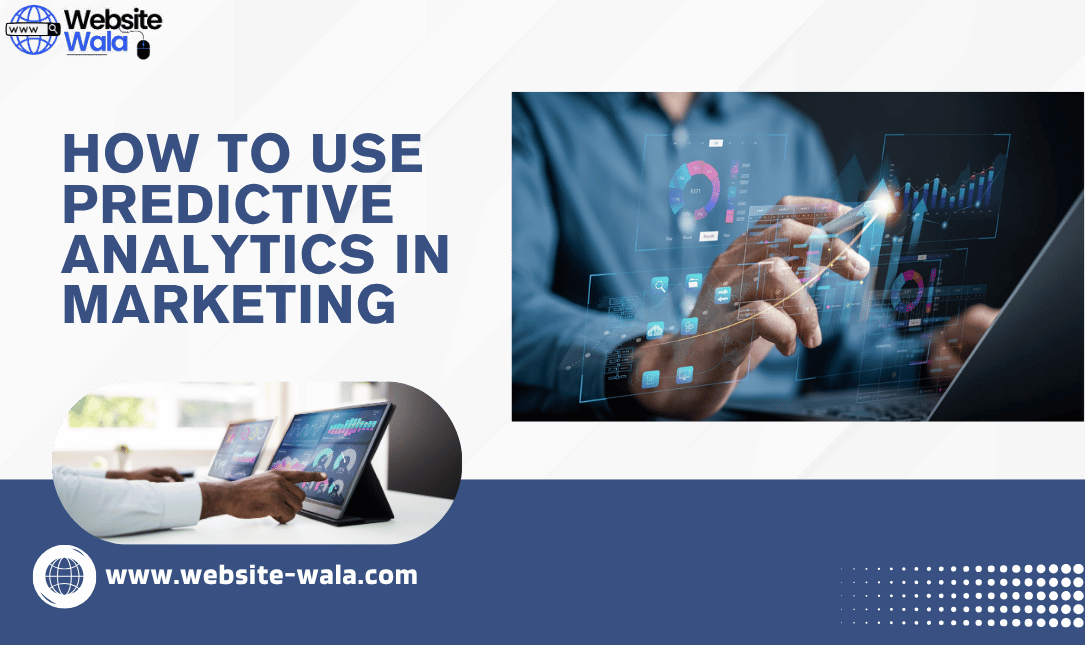
Discover How to Use Predictive Analytics in Marketing to enhance targeting, forecast trends, and boost ROI with smarter, data-driven strategies.
Introduction: Why Predictive Analytics Matters in Modern Marketing
In the digital era, understanding How to Use Predictive Analytics in Marketing is essential for brands aiming to stay ahead of the competition. Predictive analytics empowers marketers to forecast customer behavior, optimize targeting, and make smarter, data-driven decisions. By leveraging historical and real-time data, businesses can enhance their marketing strategy, improve ROI, and deliver more personalized customer experiences.
This article explores How to Use Predictive Analytics in Marketing effectively, from understanding its foundations to implementing it within your campaigns for measurable impact.
What Is Predictive Analytics in Marketing?
Predictive analytics in marketing involves using statistical algorithms, machine learning models, and data analysis to forecast future outcomes based on historical data. Marketers can predict trends, customer behavior, and campaign performance before they occur.
When learning How to Use Predictive Analytics in Marketing, it’s important to understand that it’s not about guessing — it’s about using data-driven decision-making to anticipate what customers will do next. From customer segmentation to targeting optimization, predictive analytics provides actionable insights that improve the entire marketing strategy.
The Core Components of Predictive Analytics
To effectively apply predictive analytics in marketing, it’s essential to grasp its core components:
-
Data Collection and Integration:
Collecting high-quality data is the foundation. This includes customer demographics, website activity, social media engagement, and purchase history. -
Data Analysis and Cleansing:
Before building models, marketers must ensure the data is clean, consistent, and relevant. Advanced tools help eliminate duplicates and errors for accurate insights. -
Predictive Modeling:
Predictive modeling uses machine learning in marketing to analyze past data and identify future patterns. Techniques like regression analysis, decision trees, and neural networks are commonly applied. -
Trend Forecasting and Pattern Recognition:
These tools enable marketers to forecast trends, identify seasonal patterns, and predict customer needs — a critical step in understanding How to Use Predictive Analytics in Marketing. -
Execution and Optimization:
Insights are only valuable when applied. Businesses use predictive analytics for targeting optimization, campaign personalization, and ongoing performance improvement.
Step-by-Step Guide: How to Use Predictive Analytics in Marketing
1. Define Your Marketing Objectives
The first step in How to Use Predictive Analytics in Marketing is to clearly define what you want to achieve. Are you aiming for ROI improvement, better customer segmentation, or increased retention? Setting measurable goals ensures your predictive models are aligned with strategic outcomes.
2. Gather and Organize Your Data
Successful predictive modeling relies on comprehensive data. Gather information from CRM systems, website analytics, social media, and customer feedback. Integrating these sources creates a 360-degree view of your audience, which supports accurate customer behavior prediction.
3. Choose the Right Predictive Analytics Tools
Modern marketing platforms integrate predictive analytics features using artificial intelligence and machine learning in marketing. Tools like HubSpot, Salesforce Einstein, and Google Cloud AI provide advanced analytics capabilities for marketers without requiring deep technical expertise.
4. Apply Predictive Models to Key Marketing Areas
Learning How to Use Predictive Analytics in Marketing involves identifying where it can have the most significant impact:
-
Customer Segmentation: Use predictive analytics to group customers based on shared behaviors and preferences. This leads to more personalized campaigns and higher engagement.
-
Targeting Optimization: Predictive models help determine which audiences are most likely to convert, allowing marketers to focus budget and resources efficiently.
-
Customer Behavior Prediction: Anticipate when a customer might make a purchase, unsubscribe, or churn — enabling proactive engagement strategies.
-
Trend Forecasting: Identify emerging market shifts to adjust your marketing strategy before competitors react.
5. Measure Campaign Impact and ROI
After implementing predictive models, track results through metrics such as conversion rates, customer lifetime value, and return on investment. Measuring campaign impact is crucial for evaluating success and guiding future data-driven decision-making.
Real-World Applications of Predictive Analytics in Marketing
Understanding How to Use Predictive Analytics in Marketing becomes easier through real-world examples:
-
Email Marketing Optimization:
Predictive analytics can determine the best time to send emails or which subject lines drive the highest open rates. -
Customer Retention Campaigns:
Brands use customer behavior prediction to identify at-risk customers and target them with retention-focused offers. -
Dynamic Pricing Models:
Retailers use predictive modeling to adjust prices in real time based on demand, competitor activity, and purchasing patterns. -
Social Media Advertising:
Platforms like Meta and LinkedIn employ machine learning in marketing to optimize ad targeting, ensuring ads reach audiences most likely to engage. -
Content Personalization:
Predictive analytics helps marketers recommend relevant content, boosting engagement and conversion rates.
Benefits of Using Predictive Analytics in Marketing
Embracing How to Use Predictive Analytics in Marketing delivers multiple benefits, including:
-
Enhanced Targeting Optimization: Reach the right customer at the right time with the right message.
-
Improved ROI: Focus marketing budgets on high-performing segments to increase overall profitability.
-
Smarter Data-Driven Decision-Making: Replace intuition with factual insights to guide marketing actions.
-
Better Customer Segmentation: Identify micro-segments for hyper-personalized marketing strategies.
-
Accurate Trend Forecasting: Stay ahead of market trends to adapt campaigns proactively.
Ultimately, predictive analytics enables brands to move from reactive to proactive marketing — anticipating customer needs before they arise.
Challenges and Best Practices
While the potential of How to Use Predictive Analytics in Marketing is immense, implementation can be complex. Common challenges include data silos, insufficient data quality, and lack of analytical expertise.
Best Practices:
-
Ensure data accuracy by cleansing and validating datasets regularly.
-
Start with a specific use case — such as churn prediction — before scaling.
-
Combine human insight with AI-driven analysis for balanced decision-making.
-
Continuously test, measure, and refine predictive models for optimal performance.
Future of Predictive Analytics in Marketing
The future of predictive analytics lies in the integration of artificial intelligence and machine learning. As technology evolves, machine learning in marketing will further automate predictive modeling, enabling real-time personalization and adaptive marketing strategies.
Brands that master How to Use Predictive Analytics in Marketing will have a decisive advantage — crafting highly responsive campaigns, improving ROI, and building stronger customer relationships through predictive insights.
Conclusion
Knowing How to Use Predictive Analytics in Marketing empowers businesses to make smarter, data-driven decisions that deliver measurable results. By leveraging predictive modeling, trend forecasting, and targeting optimization, marketers can anticipate customer needs, improve campaign impact, and achieve sustained ROI improvement.