Build Your Dream Website – with Website Wala



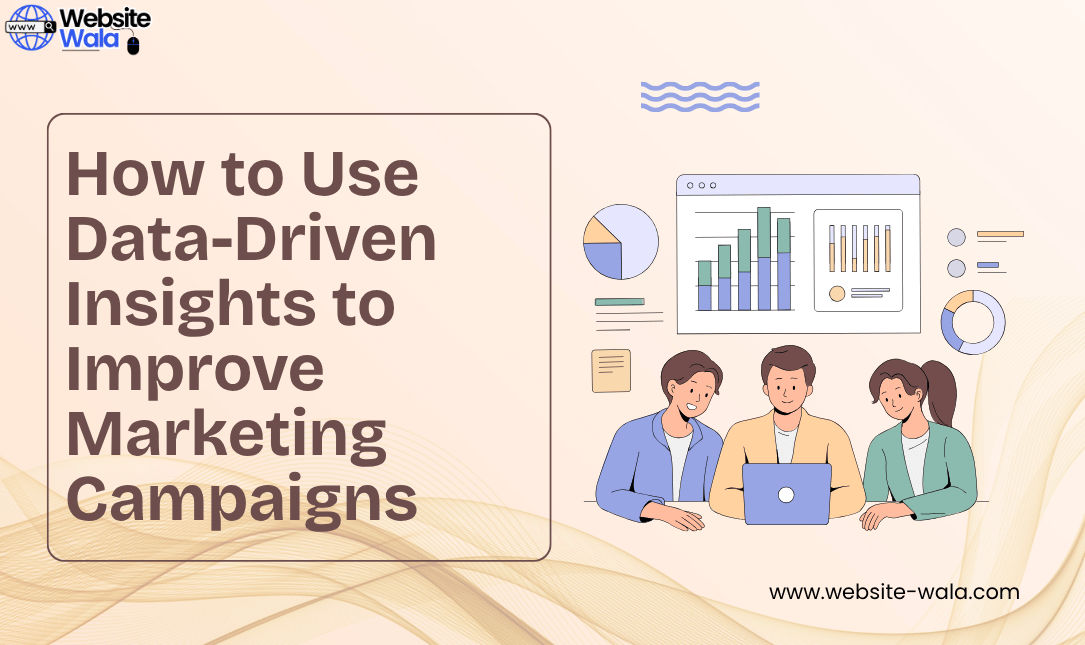
Learn How to Use Data-Driven Insights to Improve Marketing Campaigns and boost ROI with smarter data analysis and optimization strategies.
Introduction: The Power of Data-Driven Marketing
In today’s digital landscape, marketing success depends on understanding audiences, predicting trends, and making informed decisions. Knowing How to Use Data-Driven Insights to Improve Marketing Campaigns allows businesses to create smarter, more targeted marketing strategies. Data-driven marketing uses data analysis, customer insights, and performance tracking to refine every aspect of a campaign — from ad design to audience segmentation.
As competition intensifies, leveraging data-driven insights isn’t optional — it’s essential for improving campaign performance, maximizing ROI, and driving sustained growth.
What Are Data-Driven Insights in Marketing?
Before exploring How to Use Data-Driven Insights to Improve Marketing Campaigns, it’s important to understand what data-driven insights are. These insights are actionable conclusions derived from data analysis that reveal trends, consumer behavior patterns, and performance metrics.
For example, analyzing website traffic, click-through rates, and conversion data provides valuable customer insights about what content resonates with your audience. With the right data metrics, marketers can identify which channels perform best and tailor their marketing strategies accordingly.
Data-driven insights are not just about numbers — they’re about transforming raw data into meaningful narratives that guide optimization strategies and improve campaign effectiveness.
Why Data Matters for Modern Marketing Campaigns
Data fuels the foundation of all marketing campaigns. Understanding How to Use Data-Driven Insights to Improve Marketing Campaigns means recognizing that every customer action — from an email open to a purchase — generates valuable data.
With robust data analysis techniques, businesses can identify which demographics engage most, what messages convert best, and where to allocate budgets for maximum efficiency. This shift toward data-driven marketing helps marketers:
-
Improve ROI by allocating resources effectively.
-
Enhance targeted marketing with precise audience segmentation.
-
Optimize campaign performance through continuous data optimization.
-
Predict future outcomes based on historical patterns.
Ultimately, the power of data lies in its ability to make marketing measurable, predictable, and scalable.
Step-by-Step Guide: How to Use Data-Driven Insights to Improve Marketing Campaigns
1. Define Clear Goals and KPIs
The first step in learning How to Use Data-Driven Insights to Improve Marketing Campaigns is setting clear objectives. What does success look like? Whether your goal is to increase conversions, drive traffic, or improve brand awareness, you must establish measurable KPIs (Key Performance Indicators).
Common data metrics include:
-
Click-through rates (CTR)
-
Conversion rates
-
Customer acquisition costs
-
Return on ad spend (ROAS)
-
Engagement levels
These metrics form the baseline for performance tracking and future optimization strategies.
2. Collect Quality Data from Multiple Sources
Accurate data-driven insights depend on reliable data. Collect data from multiple touchpoints, including:
-
Website analytics (Google Analytics, heatmaps)
-
Social media engagement metrics
-
CRM systems for customer insights
-
Email marketing tools for open and click data
-
Ad platforms for campaign analytics
Cross-channel data provides a holistic view of consumer behavior, helping marketers understand not just what customers do, but why they do it.
3. Apply Effective Data Analysis Techniques
The heart of How to Use Data-Driven Insights to Improve Marketing Campaigns lies in effective data analysis. Use advanced data analysis techniques such as:
-
Segmentation analysis to group audiences by demographics, interests, or purchase history.
-
Predictive analytics to forecast future outcomes.
-
Attribution modeling to determine which touchpoints contribute most to conversions.
-
A/B testing to evaluate different versions of campaigns and identify what performs best.
Through detailed data analysis, marketers can uncover hidden trends, refine their marketing strategies, and boost campaign effectiveness.
4. Turn Insights into Actionable Strategies
Once insights are gathered, the next step in How to Use Data-Driven Insights to Improve Marketing Campaigns is implementation. Data is valuable only when it drives action.
For instance:
-
If data metrics show low engagement on one platform, reallocate resources to better-performing channels.
-
If consumer behavior indicates a preference for video content, adjust your marketing campaigns accordingly.
-
Use customer insights to personalize content, improving targeted marketing and overall engagement.
The goal is continuous data optimization — refining each campaign based on what the data reveals.
5. Monitor and Optimize Continuously
How to Use Data-Driven Insights to Improve Marketing Campaigns is an ongoing process. Regular performance tracking ensures that campaigns remain effective and aligned with goals.
Create dashboards to visualize campaign performance and identify trends in real time. Use automation tools to streamline reporting and ensure decisions are backed by the latest data.
As part of ongoing optimization strategies, marketers should:
-
Retest campaigns regularly.
-
Adjust bids and budgets based on ROI.
-
Update audience targeting as preferences evolve.
-
Revisit KPIs to align with business growth.
This cycle of testing, learning, and optimizing leads to marketing success over the long term.
The Benefits of Data-Driven Marketing
Understanding How to Use Data-Driven Insights to Improve Marketing Campaigns brings several measurable benefits:
-
Improved ROI: Efficient resource allocation ensures you spend money where it delivers the highest returns.
-
Enhanced Targeting: Deeper customer insights help craft personalized experiences that drive conversions.
-
Increased Campaign Effectiveness: With real-time data, campaigns become more agile and adaptive.
-
Better Decision-Making: Marketers make informed choices instead of relying on intuition.
-
Long-Term Growth: Consistent data optimization fosters continuous improvement and brand trust.
These benefits highlight why data-driven marketing is no longer optional — it’s the backbone of modern marketing strategies.
Common Challenges in Using Data-Driven Insights
While knowing How to Use Data-Driven Insights to Improve Marketing Campaigns is powerful, challenges often arise:
-
Data Overload: Too much information can overwhelm teams without proper tools.
-
Poor Data Quality: Inaccurate or outdated data leads to ineffective conclusions.
-
Lack of Integration: Data silos across departments can hinder holistic data analysis.
-
Privacy Concerns: Collecting and storing customer data must comply with privacy regulations.
To overcome these, businesses should invest in advanced analytics platforms, prioritize data hygiene, and implement unified data management systems.
Future Trends: The Next Step in Data-Driven Marketing
The evolution of How to Use Data-Driven Insights to Improve Marketing Campaigns continues with AI, machine learning, and predictive analytics leading the way. These technologies enhance data analysis techniques, automate performance tracking, and enable hyper-personalized targeted marketing.
In the near future, marketers will rely more on AI-powered dashboards that deliver real-time recommendations for optimization strategies. This will further enhance campaign performance and help businesses improve ROI faster than ever before.
Conclusion: Building Smarter Campaigns Through Data
Mastering How to Use Data-Driven Insights to Improve Marketing Campaigns empowers brands to stay ahead in a data-driven world. By combining effective data analysis, actionable customer insights, and strategic data optimization, marketers can unlock new levels of campaign effectiveness and marketing success.
The future belongs to those who transform data into action — not just numbers into reports. Embrace the power of data-driven insights, and every marketing decision you make will be backed by intelligence, precision, and purpose.